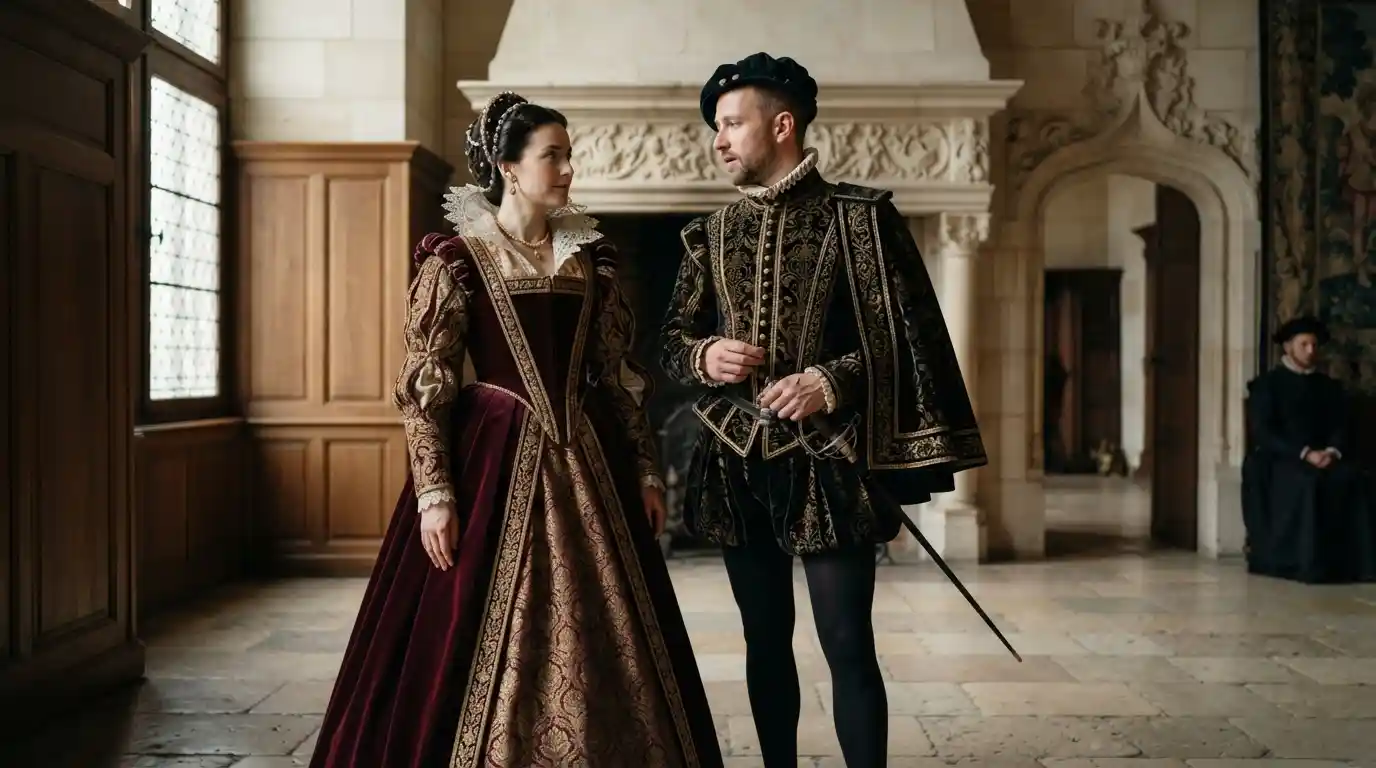
What Defined 16th Century French Fashion?
French clothing during the 1500s combined practicality with an increasing emphasis on display. Wealthy men and women could communicate status through expensive textiles, elaborate construction, decorative embroidery, fur, jewelry, and carefully coordinated accessories.
Fashion was particularly important at court. Clothing could distinguish social rank and demonstrate access to materials that were expensive or difficult to obtain. The appearance of a garment therefore depended not only on its shape but also on the quality, color, decoration, and quantity of fabric used.
For readers interested in the broader development of European style, the history of fashion can also be considered alongside later movements such as Eurotrash fashion and the changing visual language explored through a fashion magazine perspective.
The Influence of the Renaissance
The Renaissance brought major artistic and cultural changes to Europe, and clothing was part of that transformation. French elites encountered Italian styles through diplomacy, marriage, travel, warfare, trade, and cultural exchange.
Italian Renaissance influence could be seen in silhouettes, textiles, ornament, and the use of luxurious materials. French fashion gradually developed its own character while absorbing ideas circulating throughout European courts.
That relationship between regional traditions and wider European style is useful when looking at fashion historically. Modern discussions of European clothing often make similar comparisons between national and regional aesthetics.
Women’s Clothing in 16th Century France
Women’s clothing during the century generally involved several layers. A basic linen garment could be worn beneath more structured outer garments, while the visible dress could feature a fitted bodice, a full skirt, decorative sleeves, and carefully arranged necklines.
Bodices and Structured Silhouettes
The bodice played an important role in creating the desired shape. Wealthier women’s clothing could include stiffening and structured construction that produced a controlled silhouette. The shape of the upper body was often emphasized through fitted garments, while skirts could provide substantial volume.
Skirts and Layering
Skirts were frequently made from substantial quantities of fabric. Layering could create fullness and visual depth, while contrasting colors or visible underlayers added decoration without relying entirely on embroidery.
Sleeves and Decorative Details
Sleeves were an especially useful area for displaying fashionable details. They could be fitted, full, slashed, puffed, or constructed with contrasting fabrics. Decorative openings could reveal another textile underneath, creating a layered appearance.
The attention given to individual fashion details has a modern parallel in accessory-focused style. Contemporary discussions of fashion rings and turquoise jewelry, for example, show how smaller objects can contribute significantly to an overall appearance.
Men’s Fashion in Renaissance France
Men’s clothing also became increasingly elaborate among wealthy and courtly groups. A typical upper-class ensemble could include a shirt, doublet, breeches, stockings, outer garments, and accessories.
The Doublet
The doublet was a fitted upper-body garment that became central to men’s dress. Its construction helped define the torso and could be made from luxurious fabrics depending on the wearer’s wealth and status.
Breeches and Stockings
Lower garments were designed to complement the proportions of the doublet. Stockings covered the legs, while breeches varied in shape and fullness according to contemporary fashion.
Capes and Outer Garments
Outer garments provided both practical protection and opportunities for display. Cloaks and capes could be produced in expensive materials and finished with decorative elements.
Footwear was another important component of a complete outfit. While modern footwear is vastly different from Renaissance shoes, the continuing relationship between shoes and personal style can be seen in contemporary subjects such as fashionable shoes and style.
Fabrics and Textiles: The Foundation of Luxury
Textiles were among the clearest indicators of wealth in 16th century France. Silk was particularly prestigious, while wool and linen remained essential materials across different levels of society.
Silk
Silk was associated with luxury and could be woven into visually complex fabrics. Brocades, damasks, velvets, and other richly textured materials allowed wealthy wearers to create garments with depth and visual weight.
Wool
Wool was versatile and widely used. Higher-quality wool could produce refined garments, while heavier varieties were valuable for outer clothing and colder conditions.
Linen
Linen was particularly useful for shirts, undergarments, caps, and other pieces worn close to the body. Its role illustrates an important feature of historical clothing: luxurious outer garments often depended on simpler layers underneath.
Textiles also connect fashion history with the wider history of European craftsmanship and decorative arts. The enduring interest in historic materials can be seen in subjects such as the collecting of decorative Wedgwood pieces, where material, craftsmanship, and design remain central to appreciation.
Colors and Patterns in Renaissance French Dress
Color was an important part of Renaissance clothing. Rich reds, deep blues, greens, blacks, golds, and other saturated tones could create a striking appearance when combined with luxurious fabrics.
Color choices could also have social and cultural significance. Certain dyes and high-quality pigments were expensive, making some shades more accessible to wealthy households than to ordinary workers.
Patterns could include woven motifs, embroidery, floral elements, geometric designs, and decorative borders. Rather than treating decoration as an afterthought, Renaissance clothing often incorporated ornament into the structure and visual identity of the garment.
Jewelry and Accessories
Jewelry helped complete an elaborate Renaissance ensemble. Wealthy men and women could wear rings, necklaces, brooches, chains, pendants, jeweled ornaments, and other accessories.
Accessories were valuable not only for their beauty but also because precious metals and gemstones represented wealth. A relatively small object could therefore communicate considerable social information.
This relationship between clothing and adornment remains visible in modern fashion. Articles covering cosmetic fashion rings and turquoise beads and jewelry demonstrate how accessories continue to shape the character of an outfit.
Headwear, Hair, and Beauty
Headwear was an important part of Renaissance appearance. Women could wear caps, veils, hoods, and other forms of head covering, while men’s headwear varied according to occasion and fashion.
Hair was often controlled and arranged to work with the chosen head covering. This meant that a complete look depended on the relationship between clothing, hairstyle, headwear, and jewelry rather than on the dress alone.
The broader connection between beauty and visual presentation remains a recurring theme in fashion. Modern style content such as beauty and elegance-focused styling shows how appearance continues to combine clothing, grooming, and personal presentation.
French Court Fashion and Social Status
The French court helped shape elite fashion during the 16th century. Court life created a setting in which appearance mattered greatly, and wealthy individuals could use clothing to demonstrate refinement and status.
Expensive fabrics, detailed embroidery, jewelry, and carefully constructed garments required resources. The ability to wear such clothing therefore communicated economic and social position.
Fashion was also connected to political and cultural relationships. Royal marriages and international contacts helped move styles and materials between courts, contributing to the wider circulation of Renaissance fashion.
How French Fashion Changed During the Century
It is important not to treat the 1500s as a single fashion period. Clothing changed substantially between the beginning and end of the century.
Early Renaissance silhouettes retained influences from late medieval clothing while incorporating new Italian-inspired details. As the century progressed, garments became increasingly structured and decorative in elite settings.
By the later decades, fashion could feature stronger silhouettes, elaborate sleeves, richly decorated textiles, complex headwear, and carefully coordinated accessories. These developments demonstrate why historical fashion should be studied chronologically rather than represented by