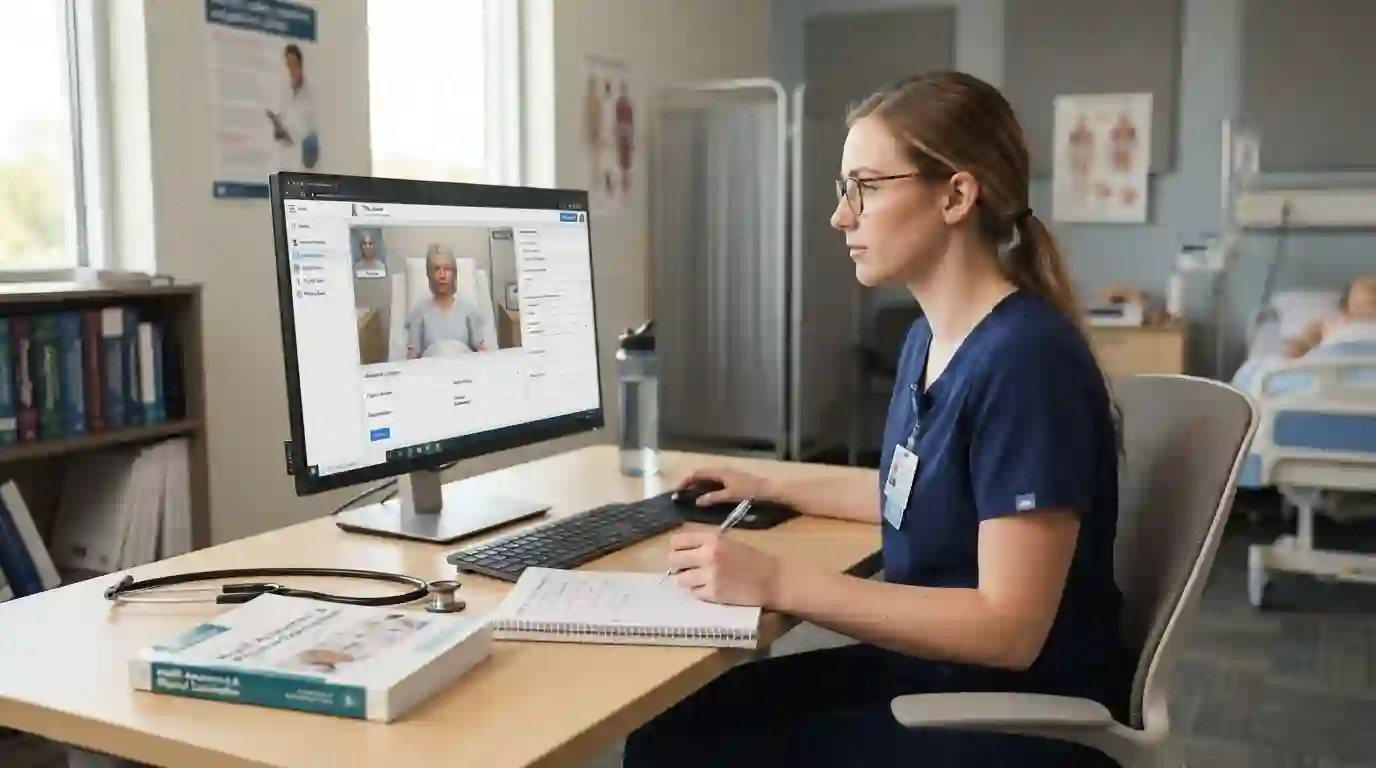
Rather than simply memorizing assessment steps, students can use a comprehensive simulation to practice organizing information, recognizing relevant findings, communicating with a patient, and documenting what they discover. Shadow Health is designed around realistic digital patient encounters, making the assessment process more interactive than studying assessment theory alone.
This guide explains what a comprehensive assessment involves, how students can approach it systematically, common challenges, and practical strategies for getting more educational value from the experience.
What Is a Comprehensive Assessment in Shadow Health?
A comprehensive assessment is a broad patient evaluation designed to bring together multiple areas of health assessment rather than concentrating on one isolated complaint or body system.
In Shadow Health, the comprehensive assessment can require students to work through a patient encounter systematically, gathering subjective information, performing appropriate physical assessments, interpreting findings, and documenting the encounter.
The process is particularly useful because students must think about the assessment as a connected clinical process. The goal is not simply to complete individual tasks. Instead, students learn how information from the interview, examination, and documentation fits together.
For students exploring different healthcare and educational technologies, topics such as healthcare career education and modern educational approaches provide useful broader context for understanding how technology is changing learning environments.
Why Comprehensive Assessment Skills Matter
Strong assessment skills are important because patient care begins with gathering and interpreting information accurately. A student who can ask appropriate questions, observe carefully, organize findings, and communicate clearly has a stronger foundation for later clinical decision-making.
Comprehensive assessment practice can help students develop several connected abilities:
- Organizing a patient interview logically
- Using appropriate therapeutic communication
- Collecting relevant subjective information
- Performing structured physical assessments
- Recognizing normal and abnormal findings
- Documenting patient information accurately
- Connecting findings across different areas of assessment
- Reflecting on areas that require additional practice
These skills become especially important as students move from classroom learning toward clinical environments. Resources covering nursing career pathways illustrate how assessment and patient-care abilities eventually become part of professional healthcare practice.
Understanding the Patient Interview
The patient interview is one of the most important parts of a comprehensive assessment. Before performing a physical examination, students need to understand the patient’s concerns, history, symptoms, and relevant background.
A good interview should feel like a conversation rather than a disconnected list of questions. Students should listen carefully to responses and use follow-up questions when additional information is needed.
Start With an Organized Approach
Beginning with a clear introduction helps establish communication and gives the encounter structure. Students should identify themselves appropriately, explain what they are doing, and create an environment in which the patient can comfortably provide information.
From there, the assessment can progress through the appropriate history areas. Depending on the assignment, this may include the chief concern, history of present illness, past medical history, medications, allergies, family history, social history, and other relevant areas.
Listen to More Than the Words
Effective assessment involves more than recording answers. Students should pay attention to how the patient communicates, whether the information is consistent, and whether the response suggests that additional clarification may be necessary.
Therapeutic communication is especially important because a patient may provide valuable information only when they feel understood and respected.
Approaching the Physical Assessment
After collecting the appropriate history, students may need to perform a series of physical assessments. A systematic approach makes it easier to avoid overlooking important areas.
Shadow Health provides assessment activities through its simulation interface, allowing students to select relevant examination actions as they work through an assignment.
A useful strategy is to think from general observations toward more specific examinations. Students should understand what they are assessing, why the assessment matters, and what information the finding contributes to the overall patient picture.
Health-related learning can also involve specialized areas such as medical imaging and patient-centered medical care, helping students appreciate how different clinical disciplines contribute to patient evaluation.
Use a Head-to-Toe Mental Framework
One of the most useful ways to approach a comprehensive assessment is to maintain a consistent sequence. A head-to-toe framework can help students organize the examination and reduce the possibility of skipping an important area.
The exact sequence should always follow the requirements of the specific assignment and the instructions provided by the course. However, thinking systematically can make the assessment easier to manage.
For example, students can mentally divide the encounter into broad areas such as:
- General appearance and overall condition
- Vital signs and general observations
- Head and neck
- Eyes, ears, nose, and throat
- Respiratory assessment
- Cardiovascular assessment
- Abdominal assessment
- Musculoskeletal assessment
- Neurological assessment
- Skin and related observations
The actual requirements can vary by course and assignment, so students should use their instructor’s instructions as the primary guide.
Documentation Is Part of the Skill
Assessment does not end when the physical examination is complete. Accurate documentation is an essential part of the clinical process.
Students should practice recording findings clearly, accurately, and in an organized manner. Documentation should distinguish between what the patient reports and what the examiner observes or measures.
For example, subjective information represents what the patient tells you, while objective information includes observable or measurable findings. Keeping those categories clear helps create a more useful clinical record.
Shadow Health’s health-assessment experiences incorporate documentation and clinical reasoning into the learning process, allowing students to practice connecting assessment findings with patient-care activities.
How Comprehensive Assessment Improves Clinical Reasoning
One of the biggest benefits of a comprehensive assessment is that it encourages students to think beyond individual facts.
Clinical reasoning requires students to collect information, recognize patterns, determine what information is relevant, and consider what additional assessment may be necessary. A virtual patient encounter provides a structured environment for practicing this process.
Students can also use technology-focused educational resources such as productivity tools and wearable technology to explore how digital tools are increasingly connected with learning, organization, and healthcare.
Common Mistakes Students Make
1. Rushing Through the Interview
Trying to complete questions as quickly as possible can result in missed information. Students should focus on understanding the patient’s responses rather than treating the interview as a checklist.
2. Asking Questions Without a Plan
An unstructured interview can become confusing. Having a general sequence in mind makes it easier to cover the required history while still allowing natural follow-up questions.
3. Ignoring Communication Quality
Clinical communication is part of patient care. Students should avoid overly complicated language, unnecessary interruptions, and questions that make the interaction feel mechanical.
4. Focusing Only on Abnormal Findings
Normal findings are also important because they help establish the patient’s overall clinical picture. Students should document relevant normal findings rather than assuming that only abnormalities matter.
5. Treating Documentation as an Afterthought
Waiting too long to document can increase the chance of forgetting important details. Developing good documentation habits during training makes the overall assessment process more reliable.
How to Prepare Before Starting a Shadow Health Assessment
Preparation can make a comprehensive assessment more efficient. Before beginning, students should review the assignment instructions and understand what areas they are expected to assess.
A simple preparation routine can include:
- Reviewing relevant assessment concepts
- Understanding the expected examination sequence
- Reviewing terminology used in the assignment
- Refreshing knowledge of normal findings
- Preparing to ask open-ended questions
- Planning how findings will be documented
- Allowing enough time to complete the encounter without rushing
Students interested in broader educational environments can also explore resources about educational facilities and adult education to see how structured learning environments support skill development.
Using Feedback to Improve
Feedback is most useful when students treat it as a learning tool rather than simply as a final grade.
After completing an assessment, review areas where information was missed, communication could be improved, or documentation was incomplete. Then identify one or two specific skills to practice during the next encounter.
Shadow Health provides performance information through its learning environment, including the Student Performance Index for applicable assignments. The platform describes the SPI as a measure related to clinical judgment and critical-thinking performance.
This makes reflection an important part of the learning process. Instead of simply completing one assignment and moving on, students can use performance feedback to identify recurring weaknesses.
Building Confidence Through Repetition
Confidence in patient assessment generally develops through practice. A student may understand the theory of an examination but still struggle to perform it smoothly when first applying that knowledge.
Virtual simulation provides a controlled environment where students can become more familiar with patient interviews, assessment sequences, documentation, and clinical reasoning before encountering the same skills in more complex settings.
Healthcare technology continues to expand in other areas as well. Topics such as artificial intelligence and technology demonstrate how digital systems are becoming increasingly important across professional environments, while healthcare-focused resources such as health and wellness services show the wider context in which patient care takes place.
How to Get More Value From the Experience
The most effective way to use a comprehensive assessment simulation is to approach it as a clinical learning exercise rather than a task that must simply be completed.
Before each encounter, think about what you already know. During the encounter, listen carefully and assess systematically. Afterward, review the findings and consider whether the information collected tells a coherent patient story.
Students can also strengthen their understanding by connecting assessment practice with related healthcare topics. For example, exploring comprehensive healthcare services and mental health care can provide broader perspective on the different patient needs healthcare professionals may encounter.
Comprehensive Assessment vs. Focused Assessment
A comprehensive assessment and a focused assessment serve different purposes.
A comprehensive assessment generally looks broadly across the patient’s health status and multiple systems. A focused assessment concentrates on a particular complaint, condition, or body system.
Understanding this distinction helps students choose an appropriate assessment strategy. Not every clinical encounter requires the same depth or breadth of assessment. The patient’s presentation and the clinical situation determine what information is most relevant.
Final Thoughts
Comprehensive Assessment in Shadow Health can be a valuable part of nursing and healthcare education because it brings together communication, history-taking, physical examination, documentation, and clinical reasoning in one structured learning experience.
The greatest benefit comes from using the simulation deliberately. Prepare before beginning, communicate naturally, follow a systematic assessment process, document carefully, review feedback, and identify specific areas for improvement.
With consistent practice, students can become more comfortable organizing patient information and connecting individual findings into a broader clinical picture. That foundation can support continued development as they progress through their nursing education and toward professional patient-care environments.