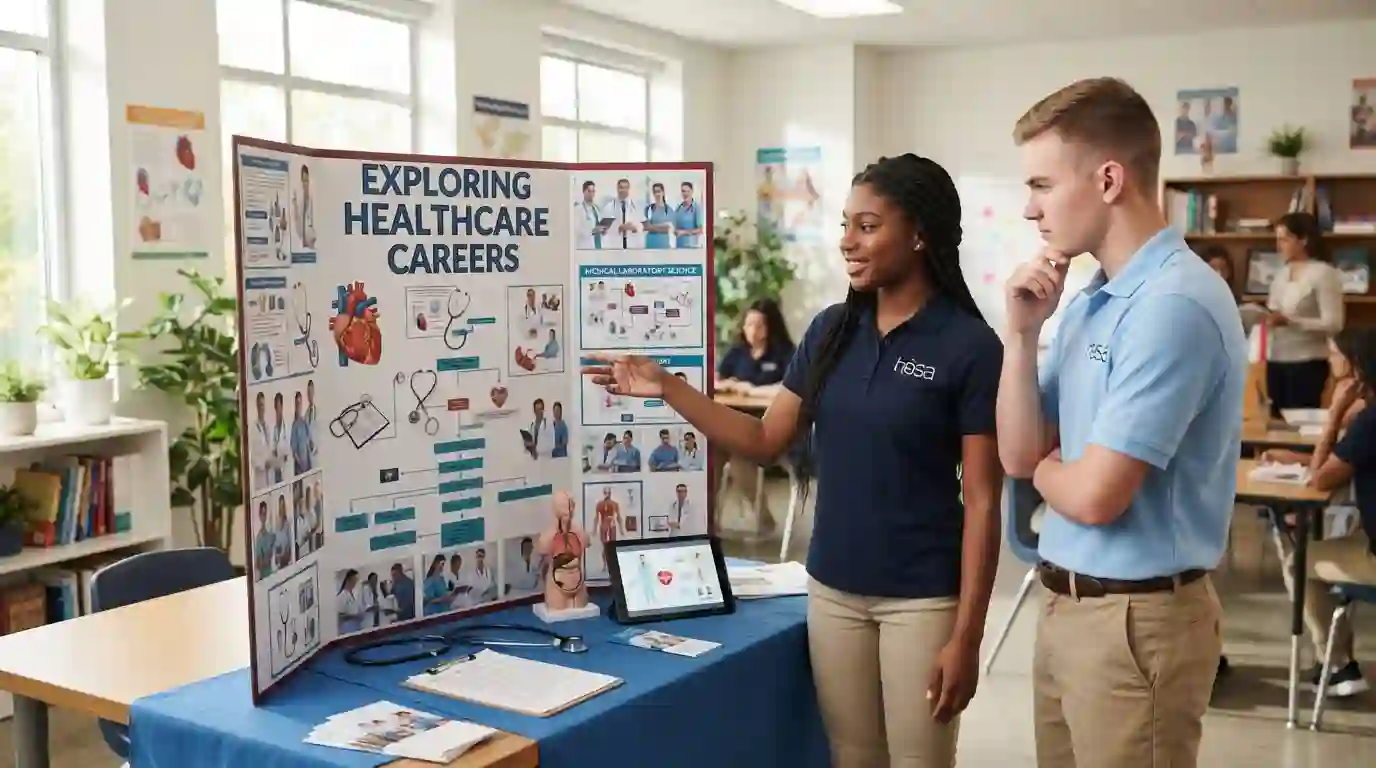
For students considering medicine, nursing, diagnostic services, biotechnology, therapy, public health, or another healthcare field, a well-developed HOSA health career display can provide a practical starting point. It encourages research while also developing communication, organization, creativity, and presentation skills.
What Is a HOSA Health Career Display?
A HOSA health career display is a structured educational presentation focused on a selected health-related career. Students research a profession and turn their findings into an organized visual display that can help other students, educators, judges, and visitors understand the career.
The subject can range from familiar professions such as nursing and medicine to specialized areas such as medical imaging, laboratory science, respiratory care, physical therapy, healthcare technology, and other allied health professions.
The strongest displays do more than provide a definition of a profession. They explain what professionals actually do, what education may be required, what skills are important, where the career can be practiced, and how the profession contributes to patient care or public health.
Why Health Career Exploration Matters
Choosing a healthcare career can be difficult when students have limited exposure to the wide range of professions available. Healthcare includes far more career paths than the most familiar roles seen in hospitals and clinics.
A health career display encourages students to investigate those possibilities before making educational decisions. Instead of simply selecting a career because it sounds familiar, students can examine its responsibilities, work environment, educational pathway, professional skills, and potential areas of specialization.
This kind of exploration can also complement broader educational experiences. Students interested in healthcare may benefit from learning about adult education opportunities, health-related learning environments, and programs that connect classroom instruction with future professional goals.
Healthcare Careers Students Can Explore
One of the most valuable aspects of a HOSA display is the opportunity to investigate a career that may not have been familiar to the student previously. Healthcare offers numerous pathways, each with different responsibilities and educational requirements.
Nursing and Patient Care
Nursing is one of the most recognizable healthcare career paths, but the profession itself includes many specialties and work environments. Students can explore clinical responsibilities, patient education, care coordination, community health, and specialized nursing roles.
Those interested in intensive clinical environments can also explore topics related to travel ICU nursing careers to understand how specialized nursing can combine advanced patient care with different professional environments.
Medical Imaging
Diagnostic imaging is another important area of healthcare. Professionals working in medical imaging help healthcare teams obtain information that can contribute to diagnosis and treatment planning.
Students creating a display about this field can explore the technology involved, the importance of accurate imaging, patient interaction, education requirements, and the role imaging professionals play within healthcare teams. Related topics can be explored through medical imaging and diagnostic services.
Healthcare Technology
Technology is becoming increasingly important across healthcare. Digital systems, medical devices, imaging technologies, data tools, and connected devices are changing how information is collected and how professionals interact with patients.
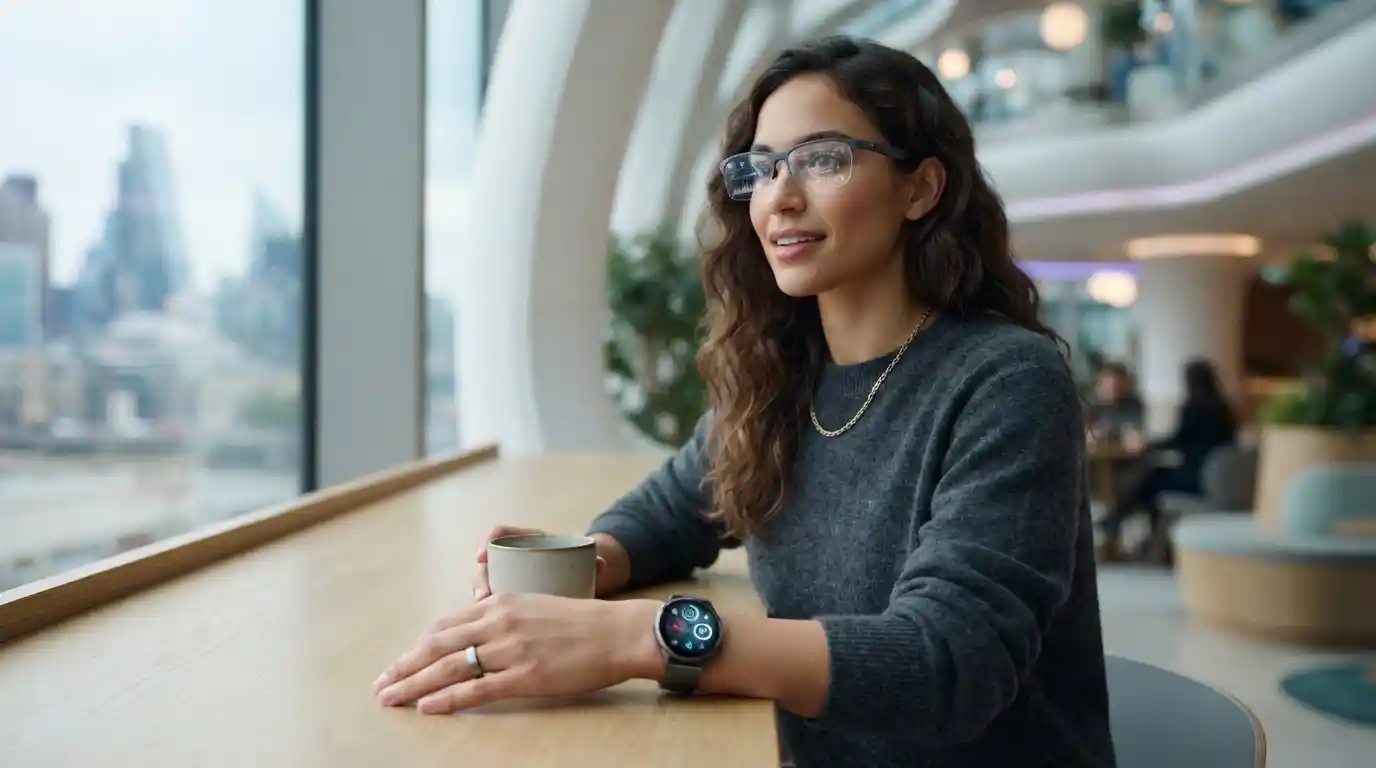
Students interested in this intersection can examine emerging technologies alongside developments in wearable technology. They can also consider how artificial intelligence and digital systems are influencing modern professional environments.
The relationship between technology and healthcare can be especially useful for students who enjoy both science and computing. Learning about artificial intelligence and cybersecurity can also help students understand why protecting sensitive digital information is increasingly important in technology-driven environments.
How to Build an Effective HOSA Health Career Display
A successful display begins with a clear research question. Instead of attempting to explain everything about an entire industry, students should focus on one specific career and organize the project around the information a person would need to understand that profession.
1. Choose a Specific Career
The first step is selecting a profession that genuinely interests the student. The topic might be nursing, physical therapy, medical imaging, laboratory science, pharmacy, public health, healthcare administration, or another specialized role.
Choosing a specific profession makes the research more focused and allows the display to provide useful details rather than broad statements.
2. Explain the Role
Begin with a straightforward explanation of what the professional does. Describe common responsibilities, the types of patients or clients they may work with, and how their role fits into the broader healthcare system.
Students can make this section more meaningful by explaining why the profession matters rather than simply listing duties.
3. Research Education and Training
Healthcare careers can have very different educational pathways. Some require specialized degrees, professional credentials, clinical training, certifications, or continuing education.
A strong display should explain the general educational route associated with the selected profession. Students should distinguish between high school preparation, postsecondary education, professional training, and additional credentials where appropriate.
Education is especially important when considering future health careers because professional responsibilities often depend on specific qualifications and training.
4. Highlight Important Skills
Healthcare professionals need more than technical knowledge. Communication, teamwork, organization, critical thinking, empathy, attention to detail, problem-solving, and professionalism can all be important depending on the career.
A display can become more engaging when it explains how these skills are used in realistic workplace situations.
5. Show the Work Environment
Students should consider where the selected professional works. Depending on the career, environments may include hospitals, outpatient clinics, laboratories, rehabilitation centers, public health organizations, schools, research facilities, community programs, or other healthcare settings.
For example, students researching patient-centered services may find it useful to understand how patient-centered medical care connects professional responsibilities with the experience of the people receiving care.
The Growing Importance of Specialized Healthcare
Modern healthcare is increasingly multidisciplinary. Patients may interact with physicians, nurses, therapists, imaging professionals, laboratory specialists, pharmacists, technicians, behavioral health professionals, and other specialists during a single episode of care.
This creates opportunities for students who may not want to follow the traditional physician pathway. A health career display can introduce students to these specialized roles and demonstrate how different professionals contribute to a common healthcare goal.
Mental and behavioral health is one example of an area where specialized professionals have an important role. Students exploring this field can examine subjects related to mental health clinical services and consider the different responsibilities involved in supporting individuals and communities.
Home-based services provide another perspective. Healthcare does not always take place inside a hospital. Students can explore home care services to understand how healthcare professionals and support workers can contribute to care outside traditional clinical settings.
Connecting HOSA Projects With Real Career Development
The value of a HOSA display can extend beyond a single competition or classroom project. The research process can encourage students to think about their own academic interests and identify experiences that may help them prepare for a future career.
For example, a student interested in healthcare technology may explore technology-related education, while another student interested in patient care may seek volunteer, observational, or educational experiences related to clinical environments.
Students can also learn about how healthcare organizations operate as businesses and professional institutions. Exploring topics such as digital marketing for medical firms can provide an example of the nonclinical functions that support healthcare organizations.
The Role of Research in a Health Career Display
Research is one of the most important components of a strong career display. Students should organize information logically and distinguish between facts about the profession, personal observations, and broader career considerations.
Useful research categories can include:
- Career responsibilities
- Education and training
- Professional skills
- Typical work environments
- Areas of specialization
- Technology used in the profession
- Career development opportunities
- Workplace collaboration
- Patient or community impact
Students can also investigate healthcare workforce development and the ways educational programs prepare people for professional roles. Broader topics involving healthcare infrastructure can help demonstrate why trained professionals are important to an effective healthcare system.
Making the Display Visually Effective
A health career display should be informative without becoming difficult to read. Clear headings, short sections, diagrams, charts, career pathways, and carefully selected visual elements can help visitors understand the subject quickly.
Students should avoid overcrowding the display with excessive paragraphs. Instead, important information should be organized into logical sections that guide the viewer from the career introduction to education, responsibilities, skills, work environment, and future opportunities.
Visual organization is particularly useful when explaining complex areas such as healthcare technology, diagnostic processes, or specialized professional roles.
Health, Wellness, and the Broader Healthcare Landscape
Healthcare careers are also connected to prevention, wellness, nutrition, physical activity, and community education. These areas can provide additional directions for students who are interested in improving health before serious illness develops.
For students intere