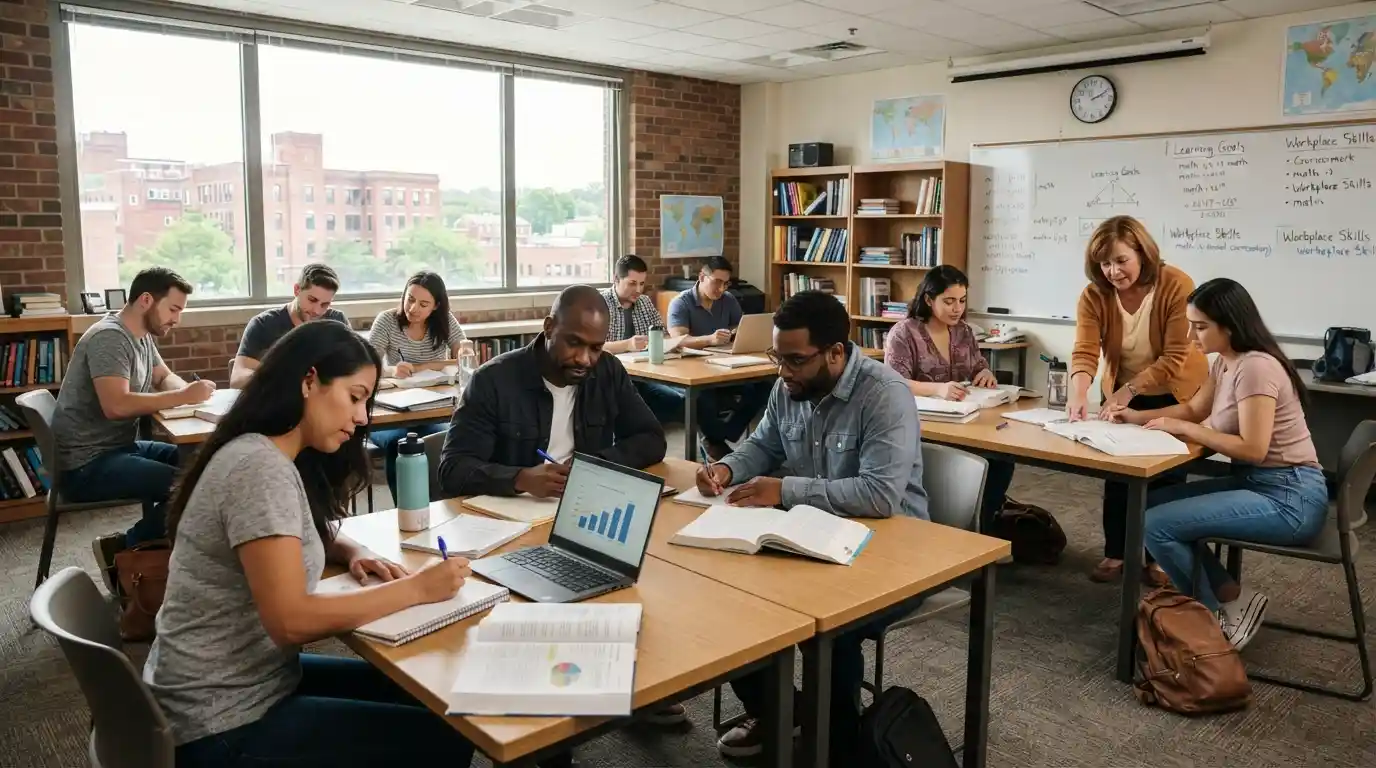
For learners comparing educational opportunities, it helps to understand what adult education actually offers, who can benefit, what programs may be available, and how to choose a pathway that matches your goals. Waterbury has a range of educational resources, making it possible for adults to continue learning while preparing for employment, further training, or personal development.
What Is Adult Education in Waterbury CT?
Adult education is designed for people who are no longer enrolled in traditional high school but want to continue developing academic, language, career, or life skills. Programs can serve adults who need a high school credential, want to improve English proficiency, need stronger foundational skills, or are preparing for a new career direction.
Waterbury’s adult education environment includes pathways connected with high school completion, GED preparation, English as a Second Language, adult basic education, citizenship preparation, and career-oriented learning. This makes adult education useful for learners with very different starting points and objectives.
If you are interested in broader educational opportunities, you can also explore transformative learning opportunities and see how different approaches to education can support lifelong learning.
Who Can Benefit From Adult Education?
Adult education is not limited to one type of student. It can help people at different stages of life who want to improve their education or prepare for a new opportunity.
- Adults who did not complete high school
- Students preparing for a GED
- Adults working toward a high school diploma
- English-language learners
- People improving reading, writing, or mathematics skills
- Adults preparing for employment or career training
- Individuals returning to education after a long break
- People developing new skills for personal or professional growth
Adult learning can also complement practical training. For example, someone preparing for a healthcare-related career may benefit from understanding healthcare career development while strengthening the academic foundation needed for additional training.
Adult Education Programs to Explore in Waterbury
1. GED Preparation
The GED pathway can be useful for adults who need a recognized high school credential. Preparation generally focuses on the major subject areas covered by the GED examination, including mathematical reasoning, reasoning through language arts, science, and social studies.
Preparing for a GED is more than memorizing information. Successful preparation involves building study habits, practicing problem-solving, improving reading comprehension, and becoming comfortable with the testing format.
Those interested in practical training may also find value in related educational subjects such as driver education and practical skills training.
2. High School Diploma Programs
Some adult learners may qualify for a high school credit diploma pathway rather than taking the GED. The appropriate route depends on an individual’s previous academic history, remaining credits, and program requirements.
A diploma pathway can be particularly useful for adults who want to complete unfinished high school coursework and establish a stronger academic foundation before moving into college, vocational education, or employment.
3. Adult Basic Education
Adult Basic Education, often called ABE, helps learners strengthen foundational academic abilities. Depending on individual needs, instruction may include reading, writing, mathematics, and other essential academic skills.
For someone who feels that previous educational gaps are making career advancement difficult, building these fundamentals can be an important first step.
4. English as a Second Language
English as a Second Language programs can help adults improve listening, speaking, reading, and writing. Stronger English skills can make everyday communication easier while also supporting employment, citizenship preparation, education, and participation in the community.
Language development is especially valuable when combined with practical career preparation. Adults can use improved communication skills as a foundation for additional training in areas such as healthcare, technology, business, or skilled occupations.
5. Citizenship Preparation
Citizenship-focused education can help eligible learners strengthen English and civics knowledge while preparing for the citizenship process. These classes may be particularly helpful for adults who want structured instruction rather than studying entirely on their own.
How Adult Education Can Support Career Goals
Education and employment are closely connected. Completing a high school credential or improving foundational skills can make it easier to qualify for additional training and pursue new professional opportunities.
For example, a learner interested in healthcare might explore topics related to medical skills and assessment, healthcare imaging, or healthcare services and career environments.
Someone considering nursing or another healthcare profession may also want to research career paths in nursing to understand how education and professional training can connect to employment opportunities.
Technology Skills Matter for Adult Learners
Modern education increasingly requires basic digital skills. Students may need to use online learning platforms, email, word-processing applications, research tools, and other digital resources.
Learning technology can therefore become an important part of an adult learner’s overall development. Resources discussing productivity apps can provide ideas for organizing study time, while information about outdated software risks highlights why digital awareness matters.
Adults interested in technology-related career directions can also explore broader topics such as AI and cybersecurity, wearable technology, and modern data technology.
Developing Practical and Career-Ready Skills
Adult education does not have to end with a diploma or test. Lifelong learning can continue through career education, vocational training, certifications, professional development, and practical skills programs.
For learners interested in hands-on fields, professional driving education is one example of training that combines education with practical skills.
Those interested in business may also benefit from exploring subjects such as digital marketing strategies and business growth and revenue skills. These topics demonstrate how continuing education can extend beyond traditional classroom subjects.
How to Choose the Right Adult Education Path
The best starting point depends on your current education level and what you want to accomplish next. Before enrolling, consider the following questions:
- Do I need a high school diploma or GED?
- Do I need to improve my English skills?
- Which academic subjects are most difficult for me?
- Am I preparing for college or vocational training?
- Do I have a specific career goal?
- Would daytime or evening classes fit my schedule better?
- Do I need additional digital or technology skills?
- What documents are required for enrollment?
Answering these questions can help you choose a program instead of simply enrolling in the first option you find.
Building a Realistic Adult Learning Plan
Adult learners often balance education with employment, family responsibilities, transportation, and other commitments. A realistic study plan should account for those responsibilities rather than assuming that school is the only priority.
Start with one clear objective. That might mean completing a diploma, preparing for the GED, improving English, or developing the academic skills needed for a specific training program.
Next, break that objective into smaller milestones. Consistent progress is usually easier to maintain when students can see measurable improvements instead of focusing only on the final goal.
Why Lifelong Learning Can Be Valuable
Returning to education can open opportunities that may have seemed unavailable earlier in life. A stronger academic foundation can support career training, professional development, improved communication, and greater confidence when dealing with educational or workplace requirements.
Learning can also be highly practical. Adults can develop skills that support employment, family responsibilities, technology use, financial decisions, communication, and participation in their communities.
Final Thoughts on Adult Education Waterbury CT
Adult education in Waterbury, CT, can provide a practical pathway for adults who want to continue learning, complete a high school credential, prepare for the GED, strengthen English skills, or build a foundation for future career training.
The most useful approach is to begin with a clear goal and then identify the educational pathway that matches your current skills and future plans. Whether you need foundational academic support or are preparing for a completely new professional direction, continuing education can be an important step toward your next opportunity.
For additional educational and professional-development reading, LeadingVista also covers topics ranging from campus and education environments to part-time career opportunities and other practical learning topics.