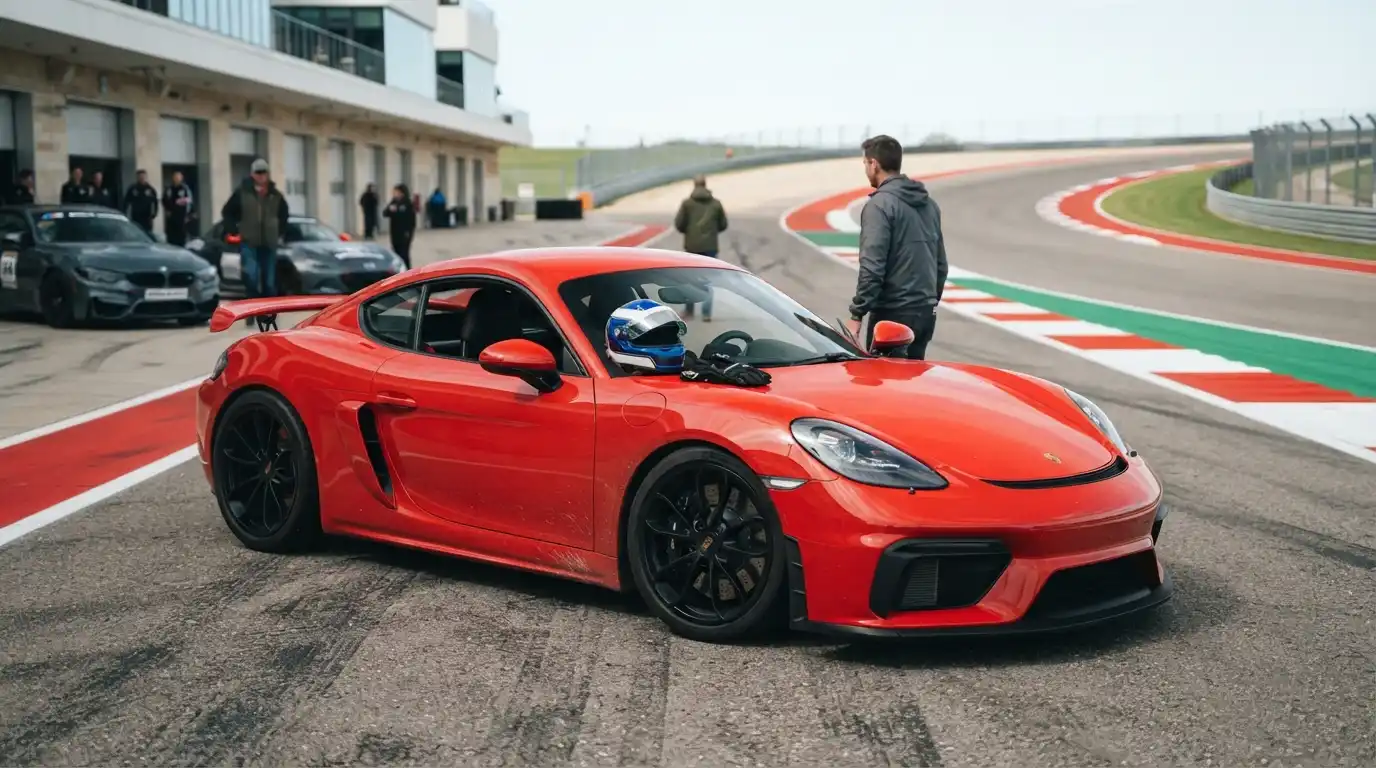
That is where Lockton HPDE Insurance comes into the picture. Designed specifically for high-performance driver education, track days, and qualifying time-trial events, this type of specialty coverage is intended to protect eligible vehicles against covered physical damage while participating in an event.
For drivers preparing for a track day, understanding how HPDE insurance works, what it can cover, how deductibles work, and how it differs from ordinary auto insurance can make the preparation process much easier.
What Is Lockton HPDE Insurance?
Lockton HPDE Insurance is specialty vehicle coverage designed for drivers participating in High Performance Driver Education, commonly called HPDE, as well as certain track day and time-trial activities.
Unlike ordinary personal auto insurance, which may contain exclusions for racing surfaces, performance driving events, or organized driving activities, an HPDE policy is specifically structured around eligible motorsports activities.
This distinction matters because a driver can have comprehensive insurance for everyday road use and still discover that damage occurring during a performance driving event is excluded.
Before heading to the track, it is therefore important to understand the difference between everyday vehicle protection and specialized insurance coverage designed for unusual driving risks.
Why Do HPDE Drivers Need Specialized Insurance?
HPDE events are generally structured around driver education and skill development rather than traditional wheel-to-wheel racing. Participants may drive their own vehicles at higher speeds, practice braking techniques, learn racing lines, and work with instructors.
Even in a controlled environment, however, accidents can happen.
A vehicle can leave the track, make contact with another object, suffer mechanical-related damage following an incident, or experience an accident during a high-speed maneuver. The financial consequences can be substantial, especially when the vehicle is a newer performance model or has expensive modifications.
Many standard auto policies have exclusions that can apply when a vehicle is being used for a high-performance driving event. That means assuming your regular policy automatically follows you onto the track can create a significant financial risk.
Drivers should review their own policy documents and speak with their insurance professional before an event rather than relying on assumptions about track coverage.
What Does HPDE Insurance Typically Cover?
Lockton Motorsports describes its HPDE coverage as protection for accidental physical damage to an eligible vehicle while participating in HPDE, track day, or qualifying time-trial events.
Depending on the applicable policy terms and conditions, notable features include coverage for:
- Street-licensed vehicles participating in eligible events
- Non-licensed track vehicles that meet eligibility requirements
- Eligible modifications made to the vehicle
- Two drivers at an event at no additional charge, subject to policy requirements
- Demonstration laps driven by an instructor
The exact terms, limits, exclusions, deductibles, and eligibility requirements should always be confirmed before purchasing coverage.
Street Cars and Dedicated Track Cars
One of the useful aspects of HPDE-specific insurance is that eligible coverage is not necessarily limited to dedicated race cars.
Many enthusiasts drive street-licensed performance vehicles at HPDE events. A daily driver, sports coupe, modified sedan, or performance-oriented vehicle may be used for occasional track days.
Other enthusiasts maintain a vehicle specifically for track use. These vehicles may have substantial modifications and may not be licensed for normal street driving.
Because vehicle eligibility can depend on the specific policy, drivers should confirm that their particular vehicle qualifies before purchasing coverage.
Drivers who are also researching general vehicle ownership costs may find resources about tire financing useful when planning the broader budget associated with performance driving.
Does HPDE Insurance Cover Vehicle Modifications?
Performance driving enthusiasts frequently modify their vehicles before taking them to the track. Common upgrades can include suspension components, braking systems, wheels, tires, cooling equipment, aerodynamic parts, and other performance modifications.
Lockton Motorsports states that its HPDE coverage includes eligible modifications made to the vehicle. However, drivers should not assume every modification is automatically covered in every situation.
The policy’s actual terms, vehicle value, documentation requirements, and applicable limits remain important.
Before an event, it is sensible to maintain records of major upgrades, receipts, photographs, and other documentation that can help establish the vehicle’s condition and value.
Can More Than One Driver Use the Vehicle?
Shared vehicles are common at HPDE events. Friends, relatives, or driving partners may take turns driving the same car during different sessions.
Lockton’s published HPDE information indicates that coverage can extend to an additional driver participating in the event, with coverage for two drivers available under the policy structure.
Drivers should make sure any required driver information is correctly provided during the application process. Additional drivers should not simply assume that coverage automatically applies without meeting the policy’s requirements.
If you frequently participate in different sporting activities or competitive events, understanding how specialized coverage works can also help you evaluate related specialty insurance options.
What About an HPDE Instructor Driving Your Car?
Instructor demonstration laps are another important consideration for first-time and experienced HPDE participants.
An instructor may drive a participant’s vehicle to demonstrate braking points, racing lines, cornering techniques, or other driving concepts. Lockton Motorsports states that its HPDE coverage includes protection while an HPDE instructor is driving the insured vehicle for demonstration laps.
This feature can provide additional reassurance for drivers who want professional coaching without treating instructor participation as an automatic gap in their vehicle protection.
Understanding the HPDE Insurance Deductible
The deductible is one of the most important parts of any specialty vehicle insurance policy.
Lockton Motorsports states that its HPDE policy uses a percentage deductible applied to the agreed limit of insurance rather than simply applying a percentage to the repair bill. Its published FAQ identifies a 15% deductible and a minimum deductible of $3,500 for vehicles valued below $100,000.
Because deductibles can significantly affect the amount a driver would have to pay after a covered loss, the deductible should be reviewed carefully before purchasing a policy.
For example, a driver should not look only at the policy premium. The more important question is whether the driver could comfortably handle the applicable deductible if a covered incident occurred.
HPDE Insurance vs. Standard Auto Insurance
The biggest difference between HPDE insurance and standard auto insurance is the type of risk being insured.
Standard personal auto insurance is generally designed around normal vehicle use on public roads. Its exclusions may restrict coverage for activities associated with racing, organized performance driving, racing surfaces, or similar events.
HPDE insurance is designed around eligible high-performance driving activities.
| Feature | Standard Auto Insurance | HPDE Insurance |
|---|---|---|
| Everyday road use | Generally designed for this purpose | Not the primary purpose |
| HPDE events | May be excluded | Specifically designed for eligible HPDE use |
| Track-day physical damage | Policy dependent and often excluded | Designed to provide eligible event coverage |
| Instructor demonstration laps | Not typically the purpose of standard coverage | Included under applicable Lockton HPDE coverage |
| Vehicle modifications | Depends on the policy | Eligible modifications may be covered subject to policy terms |
The important point is that HPDE insurance should complement a driver’s broader insurance strategy rather than automatically be viewed as a replacement for everyday auto insurance.
How to Prepare Your Vehicle Before Buying Coverage
Insurance is only one part of preparing for a high-performance driving event. The vehicle itself should also be inspected carefully before arriving at the circuit.
Check Tires
Inspect tread depth, tire condition, pressure, age, and signs of damage. Track driving can place substantially greater demands on tires than ordinary commuting.
Inspect Brakes
Brake pads, rotors, fluid, and related components should be checked before the event. Consistent braking performance is especially important when drivers repeatedly brake from high speeds.
Review Fluids
Engine oil, coolant, brake fluid, transmission fluid, and other relevant fluids should be checked according to the vehicle manufacturer’s recommendations and the requirements of the event.
Secure Loose Equipment
Loose objects inside the cabin or trunk can become dangerous during aggressive braking and cornering. Remove unnecessary items and secure anything that must remain inside the vehicle.
Drivers who regularly maintain performance vehicles may also benefit from understanding the importance of dependable automotive service, vehicle maintenance, and professional auto repair.
What Should You Bring to an HPDE Event?
Good preparation can make a track day considerably more enjoyable. In addition to the vehicle and insurance documentation, drivers may want to prepare:
- Driver’s license and event registration information
- Insurance documentation
- Helmet that meets the event’s requirements
- Water and basic personal supplies
- Tire pressure gauge
- Basic tools
- Spare fluids where appropriate
- Vehicle documentation
- Emergency contact information
If the vehicle is transported to the track rather than driven there, trailer and equipment planning becomes another consideration. Resources about carrier setup and transportation can provide broader context around vehicle logistics.
Track-Day Insurance Is Not the Same as Off-Track Insurance
One common misunderstanding is assuming that an HPDE policy automatically provides every type of protection a dedicated track car might need throughout the year.
Track-day HPDE coverage is focused on eligible participation in specified events. Off-track insurance serves a different purpose and may protect qualifying non-licensed vehicles while they are stored, transported, or kept in a paddock.
This distinction can be especially important for enthusiasts who own a dedicated track vehicle and regularly move it between storage, home, and different circuits.
Drivers with broader transportation needs may also want to consider how their overall vehicle logistics fit alongside logistics planning and vehicle transportation arrangements.
How to Choose the Right HPDE Coverage
Choosing coverage should involve more than comparing the lowest premium.
1. Confirm Event Eligibility
Make sure the event you are attending falls within the activities covered by the policy. HPDE, track day, and time-trial terminology can vary between organizers.
2. Confirm Vehicle Eligibility
Check whether your street-licensed or non-licensed vehicle qualifies and whether there are restrictions based on the vehicle’s value, configuration, modifications, or use.
3. Understand the Agreed Limit
Make sure the insured value reflects the vehicle you are actually taking to the track. Performance modifications can affect the amount invested in a vehicle.
4. Understand the Deductible
Do not focus exclusively on the premium. Know the deductible before purchasing coverage and make sure you understand how it is calculated.
5. Review Exclusions
Read the policy carefully for excluded activities, situations, vehicles, or types of damage. Insurance contracts are governed by their actual terms and conditions.
6. Consider Your Driving Schedule
Someone attending one or two HPDE events may have different insurance needs from a driver participating throughout the season.
Budgeting for repeated events may also involve financing considerations, particularly when a driver is investing heavily in a performance vehicle or equipment. For broader financial topics, see resources covering financial planning concepts and flexible financing options.
Common Mistakes HPDE Drivers Should Avoid
Assuming Your Regular Auto Policy Covers the Track
This is one of the biggest mistakes. A policy that provides excellent protection on public roads may contain exclusions for performance driving events.
Waiting Until After an Incident
Coverage decisions need to be made before participating in an event. Never assume you can purchase coverage after damage has occurred.
Ignoring Vehicle Modifications
Performance vehicles can contain significant investments beyond the original factory configuration. Keep accurate records and understand how modifications are treated by your policy.
Focusing Only on Price
A cheaper premium is not automatically the better choice. Coverage limits, deductible structure, eligibility, exclusions, and claims procedures all matter.
Failing to Check the Event Rules
Some track organizers require participants to carry event-specific insurance. Always review the organizer’s requirements before arriving.
HPDE Insurance and Motorsports Safety
Insurance should never be considered a substitute for responsible driving or proper safety preparation.
HPDE events are structured environments where drivers can develop skills under supervision, but speed and vehicle performance still create inherent risks. Drivers should follow instructor guidance, understand the event’s rules, use required safety equipment, and ensure their vehicle is mechanically prepared.
Sports enthusiasts may also be interested in broader sports performance topics and athletic activity resources when thinking about conditioning and preparation for demanding activities.
What Happens If an HPDE Event Is Cancelled?
Event schedules can change because of weather, facility issues, organizer decisions, or other circumstances.
Lockton Motorsports states that if an insured event is cancelled or the participant cannot attend, a premium refund may be available subject to applicable administration fees and the required documentation from the event organizer.
Because refund conditions can change and depend on the applicable policy, drivers should review the current cancellation requirements before purchasing coverage.
How to Handle a Potential Claim
If an incident occurs, document the situation carefully and follow the insurer’s claim instructions.
Useful information can include:
- Policy number
- Driver information
- Event details
- Date and location of the incident
- Description of what happened
- Photographs of the vehicle and surrounding area
- Relevant event or incident documentation
Do not make assumptions about whether a particular repair or loss is covered. The insurer’s claims process and the policy terms determine how a claim is handled.
Is Lockton HPDE Insurance Worth Considering?
For drivers participating in eligible high-performance driving events, dedicated HPDE coverage can address a specific gap that may exist in ordinary personal auto insurance.
The value depends on the vehicle, event schedule, coverage limit, deductible, event requirements, and the driver’s tolerance for financial risk.
For an expensive performance vehicle, even one track incident can potentially create a substantial financial loss. Paying for appropriate specialty coverage can therefore be a practical part of responsible track-day planning.
At the same time, every driver should read the actual policy documentation and verify eligibility rather than relying solely on general descriptions of HPDE insurance.
Final Thoughts on Lockton HPDE Insurance
High-performance driving is about more than speed. It is an opportunity to improve vehicle control, learn advanced driving techniques, and enjoy a vehicle in a controlled environment.
But track participation also creates risks that ordinary road insurance may not address.
Lockton HPDE Insurance is designed specifically around eligible HPDE, track-day, and time-trial activities, with coverage features that can include eligible street-licensed and non-licensed vehicles, modifications, an additional driver, and instructor demonstration laps.
Before purchasing coverage, review your existing auto policy, confirm the event and vehicle qualify, understand the agreed limit and deductible, and read the exclusions and policy conditions carefully.
With proper preparation, appropriate insurance, sound vehicle maintenance, and a safety-first mindset, drivers can approach their next high-performance driving event with greater confidence.
Frequently Asked Questions About Lockton HPDE Insurance
Does regular car insurance cover HPDE events?
Not necessarily. Many standard auto policies contain exclusions related to racing surfaces, organized performance driving, or high-performance driving events. Drivers should review their individual policy before participating.
Does Lockton HPDE Insurance cover track-day damage?
Lockton Motorsports describes its HPDE coverage as physical damage protection for eligible vehicles while participating in covered HPDE, track-day, and time-trial events, subject to the policy terms and conditions.
Can street cars receive HPDE coverage?
Yes, eligible street-licensed vehicles can qualify for HPDE coverage. Vehicle eligibility and policy conditions should be confirmed before purchasing.
Can a dedicated track car be insured?
Eligible non-licensed track vehicles can qualify for HPDE coverage. Dedicated track cars may also require separate off-track protection depending on how and where they are stored or transported.
Can an instructor drive my insured car?
Lockton Motorsports states that its HPDE coverage includes an HPDE instructor driving the vehicle for demonstration laps, subject to the applicable policy terms.
Is there a deductible for HPDE insurance?
Yes. Lockton’s published information describes a percentage deductible structure for its HPDE policy. The applicable deductible should be reviewed carefully before purchasing coverage.
Can two drivers share one vehicle at an HPDE event?
Lockton Motorsports states that coverage can extend to an additional driver participating in the event, subject to the policy’s requirements and limitations.
Can HPDE coverage be purchased shortly before an event?
Lockton Motorsports states that eligible HPDE coverage can be purchased online up to the point before the vehicle goes onto the track. Drivers should still arrange coverage as early as practical and confirm the current rules before the event.
Does HPDE insurance replace my normal auto insurance?
No. HPDE coverage is designed for eligible performance-driving activities. It should not be assumed to replace ordinary insurance needed for normal road use.
What should I check before buying HPDE insurance?
Review the event eligibility, vehicle eligibility, coverage limit, deductible, modifications, exclusions, driver requirements, cancellation rules, and claims process. Always rely on the current policy wording for final coverage decisions.