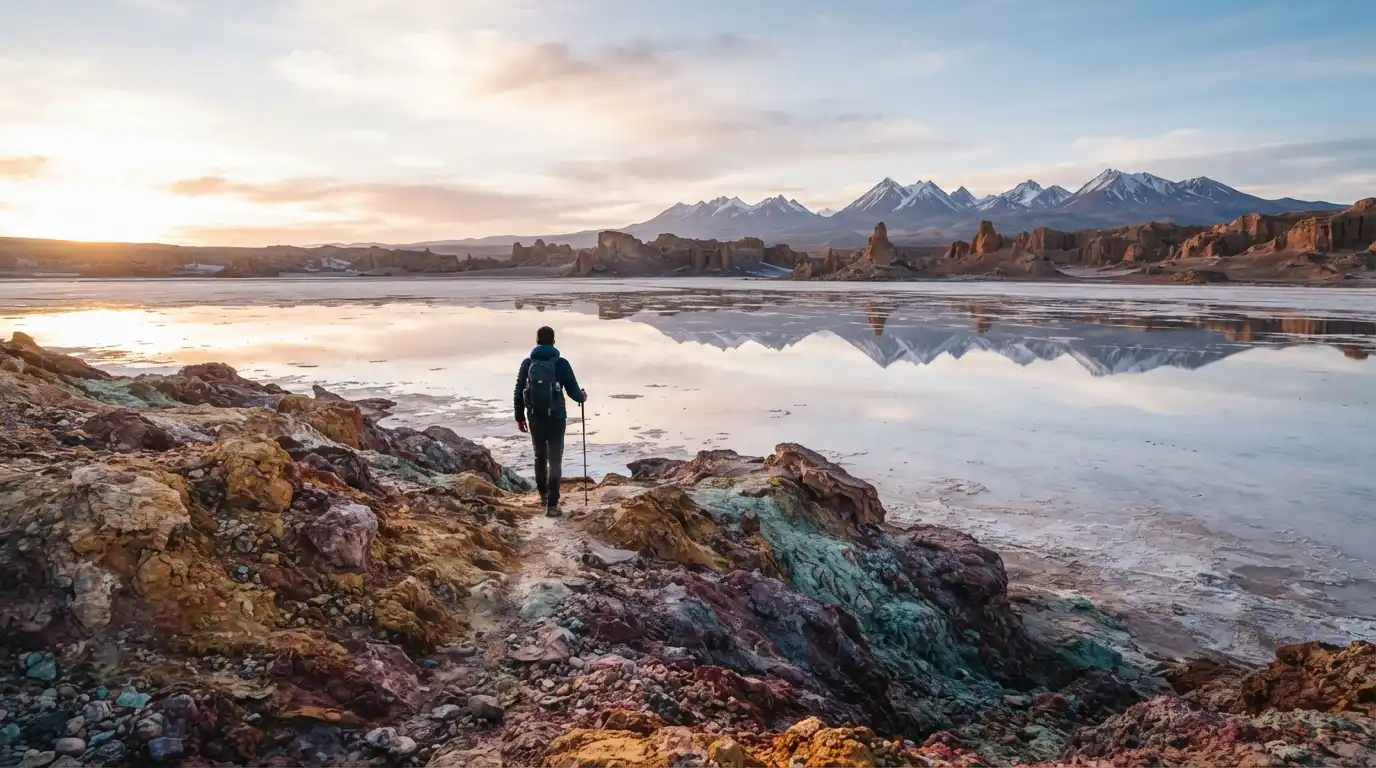
If your idea of travel goes beyond crowded landmarks and familiar vacation spots, this guide explores destinations that can make a trip feel genuinely different. From surreal salt flats and colorful mountains to unusual islands, dramatic caves, remote wilderness, and remarkable cultural landscapes, these places offer something far beyond an ordinary sightseeing itinerary.
Whether you are planning a bucket-list adventure, looking for unusual photography locations, or simply wondering where to travel for a completely different experience, these destinations are worth putting on your radar.
What Makes a Place Truly Unique?
A destination does not have to be unknown to be unique. Some places are famous precisely because their combination of geography, history, architecture, wildlife, or culture cannot easily be found elsewhere.
The most memorable unusual destinations often have one or more of these characteristics:
- Extraordinary natural landscapes: unusual colors, formations, ecosystems, or geological features.
- Distinctive cultures: traditions, architecture, food, or communities with a strong local identity.
- Remote locations: places that require extra effort to reach and reward travelers with a sense of discovery.
- Unexpected scenery: landscapes that seem almost unreal or completely different from their surrounding region.
- Rare experiences: activities or sights that cannot easily be recreated somewhere else.
That is why a unique destination does not necessarily mean a secret destination. The goal is to find places that give you a story worth remembering.
20 Most Unique Places to Visit in the World
1. Salar de Uyuni, Bolivia
Salar de Uyuni is one of the most extraordinary landscapes in South America. This enormous salt flat stretches across Bolivia like a giant white expanse, creating an almost seamless horizon under clear skies.
During the wet season, a thin layer of water can transform parts of the salt flat into a natural mirror. The sky appears to continue across the ground, creating surreal photographs and an experience that feels almost otherworldly.
Travelers who enjoy unusual landscapes, photography, and remote adventures will find Salar de Uyuni especially compelling. It is also an excellent example of why some of the world’s most amazing places on Earth are created by nature rather than human construction.
2. Pamukkale, Türkiye
Pamukkale is famous for its brilliant white terraces formed by mineral-rich thermal waters. Viewed from a distance, the formations can resemble snow cascading down a hillside even though the region enjoys a much warmer climate.
The site is particularly interesting because natural scenery and ancient history exist side by side. The ancient city of Hierapolis sits above the terraces, adding archaeological significance to an already remarkable landscape.
For travelers interested in unusual geological destinations, Pamukkale demonstrates how water, minerals, and time can create scenery that looks almost artificial.
3. Zhangye Danxia, China
The Zhangye Danxia landforms in China are known for their dramatic layers of red, orange, yellow, and other earthy tones. Wind, water, erosion, and geological processes shaped the landscape over immense periods of time.
The resulting mountains look like enormous waves of color frozen across the landscape. Visitors can use designated viewpoints and walkways to appreciate the formations while minimizing impact on the fragile environment.
It is an ideal destination for anyone searching for colorful landscapes that feel very different from conventional mountain scenery.
4. Socotra Island, Yemen
Socotra is famous for its unusual biodiversity and distinctive landscapes. The island’s dragon blood trees are particularly recognizable, with umbrella-like canopies that give parts of Socotra a prehistoric appearance.
Its geographical isolation has contributed to the development of plant and animal species found nowhere else. That biological distinctiveness is one reason Socotra is often associated with some of the planet’s most unusual natural environments.
Because travel conditions and access can change, anyone considering a visit should investigate current safety, transportation, entry requirements, and local guidance before planning a trip.
5. Cappadocia, Türkiye
Cappadocia combines geological formations, cave dwellings, historic communities, and dramatic valleys into one of the world’s most recognizable travel landscapes.
Its distinctive rock formations were shaped by volcanic activity and erosion. Over centuries, people carved homes, churches, storage areas, and other spaces into the soft rock.
Hot-air balloons are strongly associated with the region, but Cappadocia is more than a balloon ride. Hiking through its valleys, exploring underground settlements, and discovering rock-cut architecture can make the destination feel like an adventure through another era.
6. Antelope Canyon, Arizona, USA
Antelope Canyon is known for its narrow sandstone passages and flowing walls. Light entering the canyon can create dramatic patterns across the rock, particularly during favorable conditions.
The canyon’s sculpted appearance comes from erosion rather than human construction. Its smooth curves and layered surfaces make it one of the most distinctive photography destinations in the American Southwest.
If you are exploring the best places to visit in Arizona, unusual landscapes such as Antelope Canyon can add a completely different dimension to a regional itinerary.
7. Salar de Atacama, Chile
Chile’s Atacama region is famous for extreme dryness, enormous desert landscapes, volcanic scenery, salt formations, and exceptionally clear skies.
The landscape can change dramatically from vast salt flats to high-altitude lagoons and rugged volcanic terrain. Wildlife can also add unexpected life to an environment that initially appears almost completely barren.
The Atacama is especially appealing to travelers who enjoy astronomy, photography, remote landscapes, and destinations that feel far removed from ordinary urban life.
8. Waitomo Glowworm Caves, New Zealand
The Waitomo region of New Zealand is home to caves illuminated by thousands of tiny glowworms. Inside the dark cave environment, their points of light can resemble a star-filled sky.
The experience is unusual because it combines underground exploration with a naturally occurring light display. Guided cave experiences allow visitors to learn about the geological environment while observing the glowworms in their natural habitat.
New Zealand has many dramatic landscapes, but the glowworm caves provide a completely different kind of travel experience from the country’s mountains, coastlines, and outdoor adventure destinations.
9. The Giant’s Causeway, Northern Ireland
The Giant’s Causeway is famous for its tightly packed basalt columns along the Northern Irish coast. The columns formed through ancient volcanic activity and subsequent cooling of lava.
The remarkable geometric appearance of the rocks has inspired legends for generations. Today, visitors can explore the coastline and observe how geological processes created an almost architectural landscape.
It is a strong choice for travelers who want to combine natural history, dramatic coastal scenery, and cultural storytelling.
10. Lake Hillier, Australia
Lake Hillier is widely recognized for its striking pink appearance. Located on Middle Island in Western Australia, the lake stands out dramatically against the surrounding landscape.
Its unusual color has attracted travelers, photographers, and scientists interested in the environmental conditions responsible for the phenomenon. However, access to the lake and the surrounding area can be restricted, so visitors should always check current local rules rather than assuming they can freely enter the site.
The lake is a reminder that some of the most unusual places to visit are defined by a single natural feature that cannot easily be reproduced anywhere else.
11. Spotted Lake, Canada
Spotted Lake in British Columbia is another remarkable natural phenomenon. During warmer and drier periods, evaporation concentrates minerals in the lake and produces a series of visually distinctive pools.
The resulting landscape can appear dotted with different colors and shapes. The mineral composition and changing water levels make the lake particularly interesting for travelers fascinated by natural processes.
If you enjoy unusual natural attractions rather than conventional city sightseeing, destinations such as Spotted Lake deserve a place on your travel list.
12. Aoshima, Japan
Aoshima is a small Japanese island that became widely known for its unusually large cat population relative to its human population. The island’s quiet fishing-community character makes the experience very different from visiting Japan’s major metropolitan destinations.
The island should be approached respectfully. It is a residential community rather than a conventional theme park, and responsible visitors should avoid disturbing residents or treating the animals as attractions.
For travelers interested in unusual communities and distinctive island experiences, Aoshima offers a fascinating example of how local history and animal populations can create a destination unlike almost anywhere else.
13. Fly Geyser, Nevada, USA
Fly Geyser is one of Nevada’s strangest-looking geothermal formations. Its bright colors and unusual mineral-covered structures make it stand out dramatically from the surrounding desert.
The formation is connected to human drilling activity and subsequent geothermal processes rather than being a completely untouched geological feature. Over time, minerals and thermophilic organisms contributed to its unusual appearance.
Because access to the site is controlled, travelers should confirm current visiting arrangements before attempting to include it in a Nevada itinerary.
14. Lençóis Maranhenses, Brazil
Lençóis Maranhenses National Park presents an unusual combination of sweeping white sand dunes and seasonal freshwater lagoons. During the wetter part of the year, rainwater can collect between the dunes and create striking blue and green pools.
The landscape can look like a desert filled with temporary lakes, making it one of Brazil’s most distinctive natural environments.
Its combination of sand, water, sky, and constantly changing seasonal conditions makes it especially attractive to photographers and travelers seeking scenery that does not resemble conventional beach or desert destinations.
15. Tsingy de Bemaraha, Madagascar
Tsingy de Bemaraha is known for a dramatic landscape of sharp limestone formations. The Malagasy word “tsingy” is associated with the idea of walking on tiptoe, an appropriate description for the jagged terrain.
The landscape is not simply visually unusual. It also supports distinctive ecosystems and wildlife. Bridges, walkways, and routes through the formations allow adventurous travelers to experience parts of the area while navigating its challenging terrain.
For anyone looking for an unusual combination of geology, biodiversity, and adventure, Madagascar’s limestone formations are difficult to beat.
16. The Faroe Islands
The Faroe Islands offer dramatic cliffs, steep green mountains, waterfalls, small villages, and a rugged North Atlantic setting. The scenery can change quickly with the weather, giving familiar landscapes a different character from one moment to the next.
The islands are particularly appealing to travelers who prefer dramatic natural scenery over large urban attractions. Hiking and scenic drives can reveal coastal viewpoints and small communities that feel remarkably remote.
If you enjoy unusual European landscapes, the Faroe Islands can be considered alongside other places to visit in Europe.
17. Chefchaouen, Morocco
Chefchaouen is famous for its blue-painted buildings and winding streets in Morocco’s Rif Mountains. The color creates a distinctive visual identity that makes the old town immediately recognizable.
Beyond photography, the city offers opportunities to explore local architecture, markets, crafts, food, and mountain scenery. Its atmosphere is considerably different from the larger and busier Moroccan destinations.
Travelers interested in colorful architecture and culturally distinctive places will find Chefchaouen particularly rewarding.
18. The Catacombs of Paris, France
Underneath Paris lies a vast network of former limestone quarries, parts of which were transformed into the famous Catacombs. The underground passages provide an unusual perspective on the city’s history and development.
The experience is very different from visiting traditional Paris attractions. Instead of grand boulevards and famous monuments, visitors encounter a darker and more subterranean side of the French capital.
Those planning a broader trip can also explore other interesting places to visit in Paris to experience the city’s historical and cultural range.
19. The Wave, Arizona, USA
The Wave is a striking sandstone formation in northern Arizona known for its smooth, undulating layers of red and orange rock. Its appearance resembles frozen waves flowing through the desert.
The destination is particularly popular among landscape photographers and hikers. However, access is limited through a permit system because the area is environmentally sensitive and can be challenging to navigate.
Anyone planning a visit should treat the permit process, weather, navigation, water requirements, and desert safety as essential parts of the trip rather than afterthoughts.
20. Matera, Italy
Matera offers one of Europe’s most distinctive historic urban landscapes. The city’s famous Sassi districts contain homes, churches, and other structures carved into the rock, creating a remarkable relationship between architecture and the surrounding terrain.
Walking through the historic areas reveals layers of settlement history that are difficult to appreciate from photographs alone. The combination of stone architecture, ravines, churches, and narrow streets makes Matera feel unlike many other Italian cities.
For travelers interested in unusual historic destinations, Matera is an excellent addition to an Italian itinerary and can complement other places to visit in Italy.
Unique Places to Visit by Travel Style
Choosing the right destination becomes easier when you match the place to the type of experience you want.
Best for Natural Wonders
- Salar de Uyuni
- Pamukkale
- Zhangye Danxia
- Lençóis Maranhenses
- Tsingy de Bemaraha
- Spotted Lake
Best for Surreal Photography
- Salar de Uyuni
- Antelope Canyon
- Zhangye Danxia
- Lake Hillier
- The Wave
- Chefchaouen
Best for Culture and History
- Matera
- Cappadocia
- Chefchaouen
- Paris Catacombs
- Giant’s Causeway
Best for Remote Adventures
- Socotra Island
- Faroe Islands
- Tsingy de Bemaraha
- Salar de Uyuni
- Lençóis Maranhenses
How to Plan a Trip to a Unique Destination
Unusual destinations often require more planning than conventional city breaks. Before booking flights, consider the practical realities of reaching and exploring the destination.
Research Access Requirements
Some unusual attractions have permits, guided-tour requirements, seasonal restrictions, or limited visitor capacity. Check the latest rules before building your itinerary around a specific attraction.
Consider the Best Season
Natural phenomena can change throughout the year. Salt flats may look completely different when wet, seasonal lagoons may disappear during dry periods, and weather can dramatically affect mountain and coastal destinations.
Respect Local Communities
Many unique places are home to communities rather than purpose-built tourist attractions. Travel respectfully, follow local rules, avoid damaging fragile environments, and remember that residents should not have to adapt their lives to accommodate careless tourism.
Build in Extra Travel Time
Remote destinations can involve long road journeys, regional flights, ferries, hiking routes, or multiple forms of transportation. Avoid creating an itinerary so tight that a minor delay ruins the entire trip.
Think Beyond the Main Attraction
A unique landmark can be the reason you visit, but the surrounding region may offer equally interesting experiences. Research nearby towns, natural areas, cultural sites, food, hiking opportunities, and other attractions before finalizing your route.
How to Find More Unusual Travel Destinations
The world contains far more unusual destinations than any single list can cover. Once you know what makes a place distinctive, it becomes easier to discover alternatives to mainstream tourism.
For example, travelers interested in unusual geography can explore collections of places to visit in the Peloponnese, Greek cultural destinations, or Norway’s distinctive landscapes.
Those interested in unusual American destinations can look at Teton National Park, Silicon Valley, San Antonio, or places across the middle of the United States.
For travelers who prefer seasonal experiences, destinations such as New England in winter, Ohio in fall, and Florida’s west coast can provide very different experiences depending on the time of year.
Tips for Responsible Travel to Unique Places
Many extraordinary destinations are environmentally or culturally sensitive. Their uniqueness can also make them particularly vulnerable to tourism pressure.
- Stay on designated trails and paths.
- Do not remove rocks, plants, shells, or other natural materials.
- Follow photography restrictions where they exist.
- Respect wildlife and never feed wild animals.
- Support local businesses where possible.
- Follow local regulations and access restrictions.
- Carry out waste when appropriate.
- Respect local residents, customs, and private property.
Responsible travel helps preserve the very qualities that make these destinations worth visiting.
Final Thoughts
The most unique places to visit in the world are not necessarily the destinations with the biggest attractions or the largest crowds. Often, they are places where nature, history, culture, and geography combine in a way that feels completely different from everyday life.
From the mirror-like landscapes of Salar de Uyuni and the colorful formations of Zhangye Danxia to the rock-carved streets of Matera and the dramatic cliffs of the Faroe Islands, every destination on this list offers a different reason to travel.
The best choice ultimately depends on what you want from the journey. If you want unusual landscapes, prioritize natural wonders. If culture is more important, choose destinations with distinctive communities and history. If adventure is your goal, look toward remote environments and challenging terrain.
And remember: the most memorable trip is not always the one that takes you the farthest. Sometimes it is simply the one that takes you somewhere that feels completely different from anywhere you have been before.