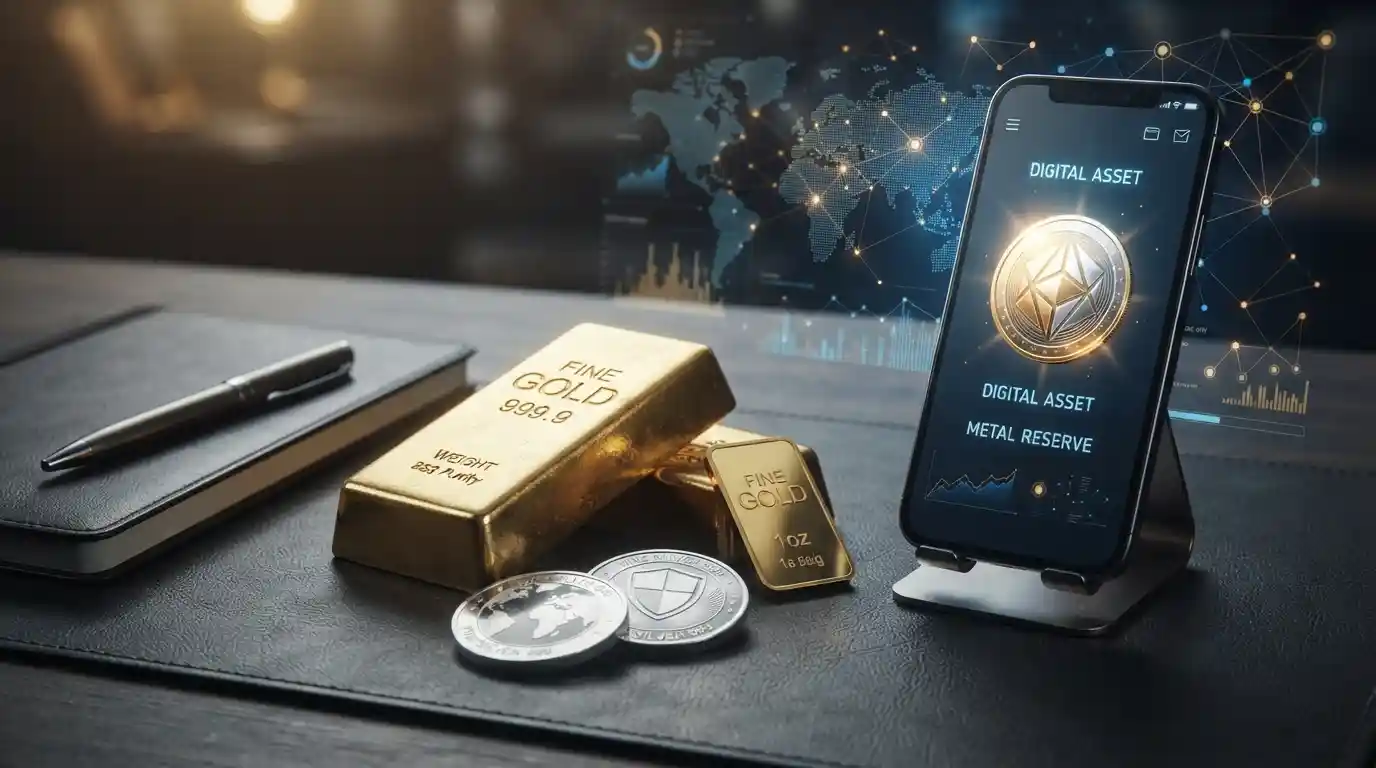
The concept is particularly interesting for people who want exposure to assets such as gold or silver while also benefiting from digital ownership, fractional access, easier transfers, and blockchain-based recordkeeping. As the broader cryptocurrency industry develops, metal-backed digital assets are becoming part of the conversation around real-world asset tokenization.
However, cryptocurrency metal should not automatically be treated as risk-free simply because a physical commodity is involved. Investors still need to understand custody, redemption, token structure, issuer risk, market liquidity, fees, regulation, and the difference between owning a physical asset and owning a digital claim connected to one.
What Is Cryptocurrency Metal?
Cryptocurrency metal generally refers to a blockchain-based digital asset that represents, tracks, or is backed by a physical precious metal such as gold or silver. The underlying concept is straightforward: physical metal is held within a custody arrangement, while digital tokens provide a blockchain-based representation of an associated value or ownership interest.
This approach brings together two very different financial worlds. Precious metals have traditionally been associated with physical ownership, long-term wealth preservation, and diversification. Cryptocurrency, meanwhile, focuses on digital ownership, blockchain networks, programmable assets, and online transactions.
The result is a form of digital asset that can potentially offer some characteristics of both systems. A token may be transferable through blockchain infrastructure while its value is linked to a physical commodity.
How Cryptocurrency Metal Works
The exact structure differs between projects, but a typical metal-backed digital asset follows several basic stages.
- Physical metal is acquired: Gold, silver, or another eligible commodity is purchased and placed into a designated custody arrangement.
- The asset is represented digitally: A blockchain token is created to represent a defined quantity or economic interest in the underlying metal.
- Tokens are distributed: Users can acquire the digital asset through the platform or marketplace supporting it.
- Blockchain records ownership or transfers: Transactions can be recorded on the relevant blockchain network.
- Redemption may be available: Depending on the project, holders may have mechanisms for converting their digital position into physical metal or another asset.
These steps make cryptocurrency metal different from simply buying a cryptocurrency whose price happens to move alongside gold. The underlying structure matters. A token can be price-linked to metal without providing the same rights as directly owning allocated physical bullion.
Why Combine Cryptocurrency With Physical Metal?
The attraction of cryptocurrency metal comes from the potential to solve some practical limitations associated with traditional precious-metal ownership while retaining a connection to a tangible asset.
Digital Accessibility
Physical bullion can require dealers, storage arrangements, transportation, insurance, and secure handling. A blockchain-based representation can potentially make buying, holding, and transferring a metal-linked position more convenient.
Fractional Ownership
Large physical bars can be expensive and impractical for individual buyers. Tokenization can divide exposure into smaller digital units, allowing users to gain exposure to a fraction of an underlying commodity rather than purchasing a complete bar or coin.
Transferability
Physical precious metals are not designed for instant digital transfers. A blockchain token, by comparison, can potentially be transferred between compatible wallets or accounts without physically moving the underlying metal.
Blockchain Transparency
Blockchain technology can provide a publicly verifiable transaction history. This can make the movement of tokens easier to audit from a technical perspective, although blockchain visibility does not automatically prove that every physical asset claimed by an issuer actually exists.
This distinction is important when evaluating any cryptocurrency investment. The technology recording token ownership and the real-world custody of physical assets are separate parts of the system.
Cryptocurrency Metal vs. Traditional Cryptocurrency
Traditional cryptocurrencies and metal-backed digital assets can behave very differently.
| Feature | Traditional Cryptocurrency | Metal-Linked Digital Asset |
|---|---|---|
| Underlying reference | Usually determined by the digital asset ecosystem and market demand | Typically connected to a physical metal or metal price |
| Physical backing | Usually none | May involve physical gold, silver, or another commodity |
| Blockchain use | Core part of the asset | Used to represent and transfer the digital asset |
| Primary risk | Market volatility, technology, regulation, liquidity | Market, custody, issuer, redemption, technology, and regulatory risks |
| Value relationship | Primarily determined by digital-asset market dynamics | Often influenced heavily by the underlying metal |
This does not mean metal-backed tokens are automatically safer than other cryptocurrencies. They simply have a different risk structure.
Cryptocurrency Metal and Gold
Gold is one of the most natural commodities for tokenization because it has a long history as a store of value and an established global market.
A digital representation of gold can potentially make small-scale ownership easier while allowing the underlying asset to remain stored in a professional custody environment. Instead of physically transporting gold whenever ownership changes, the digital token can change hands while the underlying metal remains in custody.
For investors interested in this area, it is important to distinguish between three different concepts:
- Direct ownership of physical gold
- Financial exposure to gold through an investment product
- Blockchain-based ownership or representation of gold
These structures may have different legal rights, fees, liquidity characteristics, tax treatment, and redemption processes.
Cryptocurrency Metal and Silver
Silver can also be represented through blockchain-based assets. Like gold, silver has an established physical market, but its economic characteristics are different because silver has substantial industrial demand in addition to investment demand.
A token linked to silver can therefore give users digital exposure to the metal without requiring them to physically store coins or bullion. However, the same questions remain relevant: Who owns the physical silver? Where is it stored? Is it allocated? How is the supply verified? What happens if the issuer becomes insolvent?
These questions are more important than the word “cryptocurrency” appearing in the product description.
Potential Benefits of Cryptocurrency Metal
1. Easier Access to Precious Metals
Digital platforms can reduce some of the friction associated with purchasing and managing physical commodities. Users may be able to obtain smaller positions without dealing with the logistics of storing bullion themselves.
2. Fractional Exposure
Tokenization can make fractional ownership practical. This can be useful for people who want to build exposure gradually rather than making a large physical purchase.
3. Digital Transfer
A blockchain-based asset can potentially be transferred digitally, making ownership movement substantially different from transferring a physical bar, coin, or certificate.
4. Portfolio Diversification
Some investors consider precious metals as one component of a diversified portfolio. A digital metal asset can provide another way to obtain commodity exposure while remaining within a digital-asset environment.
However, diversification does not eliminate investment risk. Anyone considering this type of asset should evaluate the overall portfolio rather than viewing cryptocurrency metal as a standalone solution.
Risks and Limitations to Consider
The biggest mistake investors can make is assuming that physical backing removes all risk.
Custody Risk
The physical metal has to be stored somewhere. Investors should understand the custody arrangement, the identity of the custodian, insurance coverage, segregation practices, and procedures for verifying reserves.
Issuer Risk
A token may depend on a company or organization that creates, manages, or redeems the asset. If that organization experiences operational, financial, or legal problems, token holders may be affected.
Redemption Risk
Some products may offer redemption for physical metal, while others may only provide price exposure. Even when redemption exists, minimum amounts, fees, geographic restrictions, verification requirements, and other conditions may apply.
Blockchain Risk
Digital assets can depend on smart contracts, wallets, blockchain networks, exchanges, bridges, and other technology. Technical vulnerabilities can introduce risks that do not exist in the same form when holding physical bullion directly.
Liquidity Risk
A token may theoretically represent valuable physical metal while still having limited trading liquidity. Investors should therefore distinguish between the value of the underlying commodity and the liquidity of the token itself.
Regulatory Risk
Rules surrounding tokenized assets, commodities, securities, custody, taxation, and cryptocurrency can change. A product that is available in one jurisdiction may have different restrictions elsewhere.
How to Evaluate a Cryptocurrency Metal Project
Before purchasing any metal-backed digital asset, prospective investors should examine the structure rather than relying solely on marketing language.
Check the Underlying Asset
Determine exactly what the token represents. Is it gold, silver, a specific quantity of metal, a claim against an issuer, or simply an asset whose price follows the commodity?
Understand the Backing
Look for clear information about the physical reserves. Ideally, documentation should explain how much metal exists, where it is held, who has custody, and how reserves are verified.
Study Redemption Rules
Do not assume that a token can automatically be exchanged for a physical bar. Read the actual redemption terms and understand minimum quantities, fees, delivery requirements, and eligibility restrictions.
Review the Technology
Understand which blockchain the asset uses and whether the token depends on smart contracts or additional infrastructure. Technology should be treated as part of the investment risk rather than as a guarantee of safety.
Compare Liquidity
Look at where the asset can be traded and whether meaningful trading activity exists. An asset that is difficult to sell may not provide the flexibility an investor expects.
Cryptocurrency Metal vs. Physical Precious Metals
Physical metal provides direct possession, but it also introduces practical responsibilities. Storage, security, insurance, transportation, dealer spreads, and verification can all matter.
Cryptocurrency metal attempts to move some of the ownership experience into a digital environment. That can improve accessibility and transferability, but it also introduces technology and counterparty considerations.
Neither approach is universally better. The right choice depends on whether the investor prioritizes physical possession, digital transferability, convenience, liquidity, or direct control.
The Role of Blockchain in Metal Ownership
Blockchain technology is particularly relevant because it can create a digital ownership and transaction layer around an otherwise physical asset.
Traditional precious-metal ownership can involve paper records, dealer accounts, vault receipts, certificates, or other documentation. Tokenization provides another digital representation that can potentially interact with blockchain applications.
This creates possibilities beyond simple buying and selling. In the broader digital-asset ecosystem, tokenized real-world assets can potentially interact with decentralized applications, lending systems, payment infrastructure, and other blockchain services.
The same tech