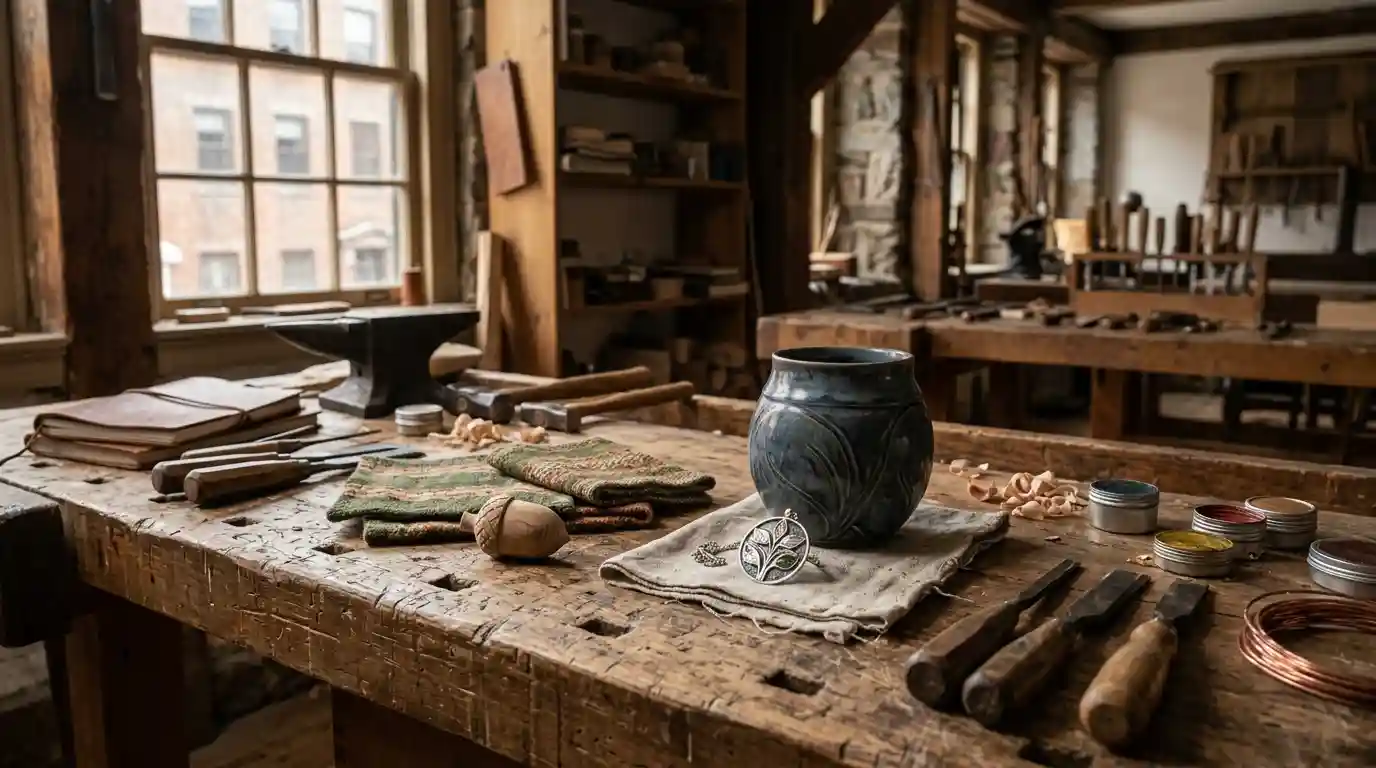
Its history offers a useful perspective on the relationship between traditional skills and modern creativity. From exhibitions and educational activities to opportunities for craftspeople to present their work, the Society helped shape the way audiences understood functional art. Its legacy also raises important questions about how cultural organizations can preserve creative traditions while adapting to changing audiences and economic realities.
What Was the Society of Arts and Crafts Boston?
The Society of Arts and Crafts, historically associated with Boston, Massachusetts, was founded to encourage higher standards in handicrafts and support the people who designed and produced handmade objects. It emerged during a period when the Arts and Crafts movement was challenging the growing dominance of mass-produced goods.
Rather than treating handmade objects as merely decorative or practical, the movement emphasized the relationship between design, materials, skilled labor, and everyday life. Furniture, jewelry, ceramics, metalwork, textiles, and other crafted objects could combine utility with artistic expression.
This philosophy connected craftsmanship with broader questions about culture, work, and community. Similar themes can be explored through the forces shaping communities and society, where shared values and creative participation help influence cultural identity.
The Origins of the Society in 1897
The Society was incorporated in Boston in 1897 by people interested in art, teaching, architecture, and craft. Its founding purpose was to improve the quality of artistic work across different handicraft disciplines and encourage productive relationships between designers and makers.
At the time, industrial manufacturing was transforming how products were made and sold. Although mass production made many goods more accessible, advocates of the Arts and Crafts movement worried that speed and quantity could come at the expense of material quality, thoughtful design, and individual skill.
The Society offered a platform for a different approach. It encouraged craftspeople to develop original designs, refine their techniques, and create objects in which form and function worked together. These principles remain relevant to contemporary design, including the careful visual decisions involved in light and airy photography and visual presentation.
Why the Arts and Crafts Movement Mattered
The Arts and Crafts movement was more than a preference for handmade products. It represented a wider discussion about the value of skilled labor, the relationship between people and their possessions, and the role of design in everyday life.
Supporters favored honest materials, careful construction, balanced decoration, and designs suited to their intended purpose. Natural forms and traditional techniques often provided inspiration, although individual makers interpreted these principles in different ways.
Boston became an important center for these ideas because of its established cultural institutions, educational networks, and community of artists and craftspeople. The Society helped connect makers with audiences who might otherwise have encountered handmade work only in private studios or small workshops.
The movement’s interest in purposeful design also provides a useful contrast with fashion trends that prioritize visual impact. For example, 16th-century French fashion demonstrates how historical clothing can reflect the materials, craftsmanship, social values, and aesthetic preferences of its period.
Exhibitions, Sales, and Educational Opportunities
Exhibitions were central to the Society’s work. They gave craftspeople opportunities to present their creations, receive recognition, and reach audiences interested in quality handmade objects. Carefully selected displays also helped visitors understand the differences between ordinary manufactured goods and work shaped by individual artistic decisions.
Sales activities created another important connection between makers and the public. By offering selected craft objects for purchase, the Society helped demonstrate that artistic craftsmanship could have a place in everyday homes as well as galleries and collections.
Education was equally important. Lectures, publications, discussions, and other learning opportunities helped develop appreciation for the techniques and ideas behind craft production. The organization’s historical publication, Handicraft, contributed to the exchange of information about makers, exhibitions, and applied art.
These activities established a model in which cultural organizations could combine public education, artistic recognition, and commercial opportunities. Similar principles can inform creative gatherings and well-planned events and exhibitions, where presentation and audience engagement influence how people experience creative work.
Craftsmanship Across Different Disciplines
One of the strengths of the Arts and Crafts tradition was its broad understanding of artistic practice. Craftsmanship could be expressed through furniture, ceramics, jewelry, glass, metalwork, textiles, and other materials. Each discipline required its own combination of technical knowledge, experimentation, and design judgment.
Jewelry, for instance, can reveal how material selection, proportion, surface treatment, and fine detailing contribute to an object’s character. Contemporary accessories continue to draw attention to these principles, as seen in discussions of fashion rings and personal style.
Textile traditions offer another example. The selection of fabric, decorative patterns, stitching, and finishing can transform a functional object into a meaningful expression of cultural identity. Historical and contemporary clothing therefore provide useful ways to explore the relationship between technique and appearance, including the evolving traditions described in bridal saree design.
Across these disciplines, the central lesson is consistent: quality craft depends on more than appearance. It also involves an understanding of materials, the purpose of an object, the skill required to produce it, and the decisions that distinguish one maker’s work from another’s.
The Society’s Influence on Boston’s Creative Community
For generations, the Society provided a framework for bringing makers, collectors, educators, and members of the public into closer contact. Its exhibitions and programs helped establish craft as a subject worthy of sustained attention rather than an occasional decorative interest.
This work also contributed to a broader cultural environment in which independent artists could develop professional identities and find audiences for specialized work. Creative communities depend on more than individual talent: they also need spaces for presentation, opportunities for learning, informed audiences, and networks that support collaboration.
Boston’s wider cultural landscape includes institutions devoted to visual art, design, history, and contemporary expression. The city’s artistic identity can also be considered alongside the work of organizations discussed in The American Ethical Society, which provides a different perspective on the relationship between shared principles and public life.
The Society’s history illustrates how a specialized organization can influence a field by creating opportunities for people to encounter, discuss, and value creative work.
Challenges Facing Traditional Craft Organizations
Organizations dedicated to handmade art face challenges that extend beyond producing successful exhibitions. They must balance operating costs, suitable exhibition space, public awareness, artist compensation, educational programming, and changing patterns of cultural participation.
Traditional galleries can provide valuable physical encounters with art, but maintaining permanent spaces requires reliable funding and sufficient visitor engagement. Digital platforms create additional ways to present creative work, yet online visibility does not automatically replace the experience of examining an object’s scale, texture, finish, and construction in person.
Another challenge is communicating the value of handmade work in a market filled with inexpensive, mass-produced alternatives. Effective storytelling can help audiences understand the time, expertise, material choices, and experimentation involved in making an individual piece.
These issues are relevant across creative industries, from independent artists to businesses that rely on distinctive visual identities. The considerations behind memorable logo and brand design demonstrate how visual communication can influence recognition, although craft organizations must also preserve the integrity and individuality of the makers they represent.
What Happened to the Society of Arts and Crafts?
The Society’s long history eventually encountered significant financial and operational pressures. Changes in location, the challenges of maintaining a public exhibition and retail space, and broader difficulties affecting cultural organizations complicated its ability to continue its work.
In October 2025, reports announced that the organization would close after 127 years. This marked the end of a major chapter in Boston’s organized craft history. Its closure highlights the vulnerability of cultural institutions that depend on sustainable funding, accessible venues, and continued public participation.
The end of an organization does not erase the influence of the artists it supported or the ideas it helped promote. Historical records, exhibition materials, publications, and surviving works remain valuable for understanding how craft developed in the United States. The Society’s story can therefore continue to inform artists, researchers, collectors, and anyone interested in the history of design.
The Lasting Legacy of the Society
The Society of Arts and Crafts Boston helped establish a lasting case for treating craftsmanship as an important part of artistic culture. Its emphasis on skilled labor, thoughtful design, public education, and the recognition of independent makers remains relevant even as the organizations supporting those values change.
Its history also encourages a broader understanding of creativity. Artistic quality can emerge from a handmade vessel, a carefully constructed piece of furniture, a finely worked metal object, or a textile shaped by generations of technical knowledge. Each example reflects decisions that connect materials, function, and human imagination.
For today’s creative communities, the central lesson is the importance of building lasting connections between makers and audiences. Exhibitions, education, accessible storytelling, responsible collecting, and sustainable support can all help preserve the knowledge and skills that make craft meaningful.
The Society’s legacy ultimately rests not only on its institutional history but also on the wider recognition that handmade work deserves attention, respect, and a meaningful place in cultural life.