Corporate event planning packages simplify this process by combining selected services into a defined proposal. The right package depends on your event objectives, guest count, location, schedule, and the amount of professional support required. Understanding the available options makes it easier to compare proposals and avoid unexpected expenses.
What Are Corporate Event Planning Packages?
A corporate event planning package is a collection of professional planning and coordination services offered for a business event. Depending on the provider, it may include venue sourcing, budget management, supplier coordination, catering arrangements, event design, guest registration, technical production, and on-site management.
Some packages cover planning services only, while others combine planning fees with venue hire, food, equipment, décor, and staffing. This distinction is essential because two proposals with similar prices may include very different deliverables.
Businesses arranging conferences, company celebrations, or client gatherings should define their goals before comparing options. For example, a formal dinner may need hospitality coordination, while a multi-session conference requires detailed scheduling and technical support.
Common Corporate Event Planning Packages
1. Basic Coordination Package
A basic package suits smaller meetings, internal workshops, and straightforward business gatherings. The company may already have selected the venue and suppliers, leaving the planner to coordinate schedules, confirm arrangements, and oversee event-day activities.
- Event timeline and planning checklist
- Supplier confirmations and basic communication
- Room setup coordination
- Event-day schedule management
- Basic registration or guest-list support
This option is appropriate when the event has limited technical requirements and the company can handle some preparation internally. Confirm whether the fee covers planning meetings, revisions, and on-site hours.
2. Partial Planning Package
A partial planning package is designed for businesses that have started organizing an event but need professional assistance with specific responsibilities. The planner may help source vendors, negotiate arrangements, coordinate catering, develop a run sheet, or manage selected logistics.
This arrangement offers flexibility because businesses retain control over tasks they can manage while outsourcing complex or time-consuming work. It is particularly useful when internal teams have limited event experience or competing responsibilities.
3. Full-Service Corporate Event Package
A full-service package provides support from the initial brief through event-day delivery. Depending on the contract, the planner may manage concept development, venue selection, budgeting, supplier sourcing, event design, catering, audiovisual production, invitations, guest communications, staffing, and post-event reporting.
Full-service planning is useful for executive gatherings, annual company meetings, conferences, award ceremonies, and important client events. The proposal should identify a primary contact, decision deadlines, approval procedures, and the responsibilities retained by your company.
4. Conference and Seminar Package
Conferences and seminars involve multiple sessions, speakers, registration processes, room transitions, and technical requirements. A specialist package may include speaker coordination, agenda development, attendee check-in, breakout-room planning, presentation support, and audiovisual testing.
For larger programs, ask whether the planner will manage sponsor requirements, exhibitor arrangements, accessibility, live streaming, and backup procedures. These responsibilities can significantly affect both the workload and the final price.
5. Corporate Celebration and Gala Package
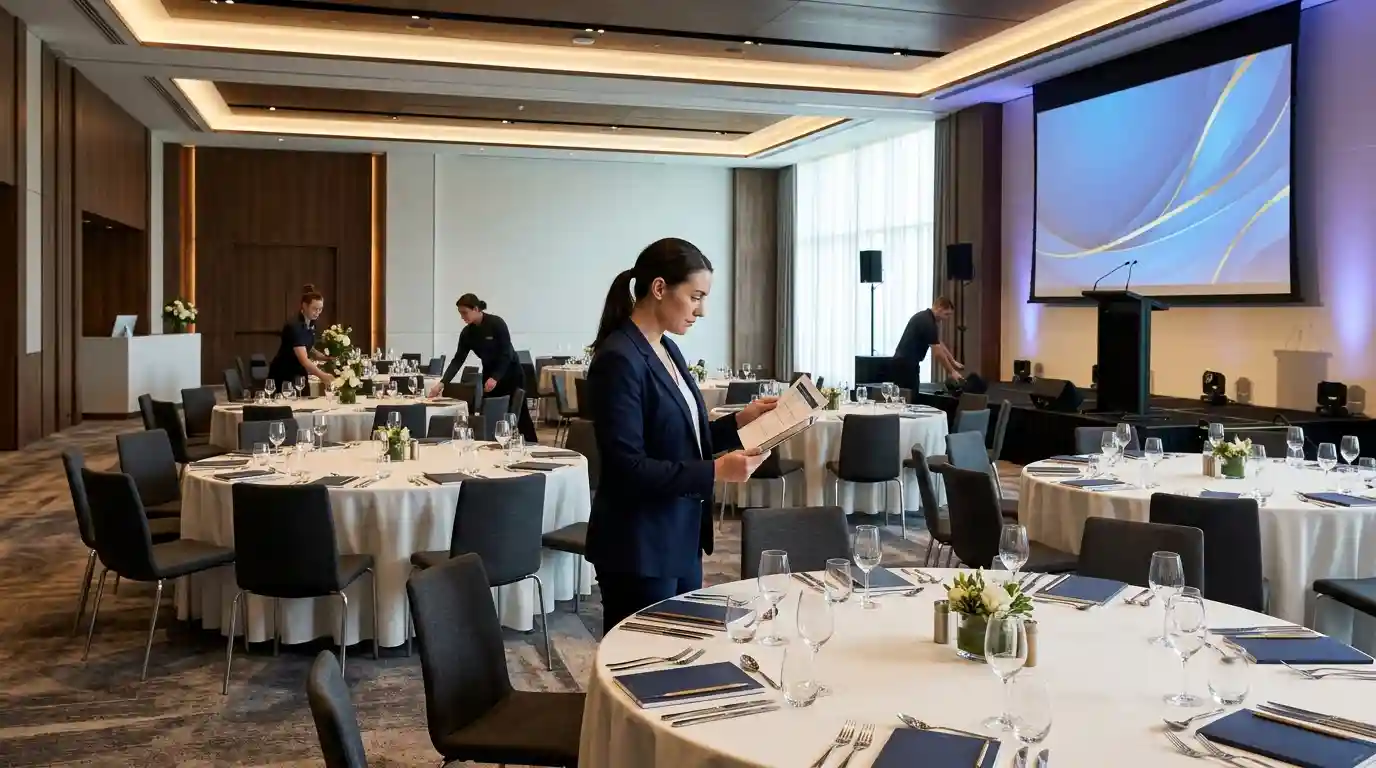
Company anniversaries, employee recognition evenings, award ceremonies, and holiday celebrations often emphasize hospitality and atmosphere. Packages may include venue styling, table layouts, entertainment coordination, catering, photography, stage management, and awards presentation support.
Businesses should distinguish essential services from optional upgrades. Custom staging, premium entertainment, elaborate floral installations, and specialist lighting can increase costs without necessarily improving the experience for every audience.
6. Product Launch and Brand Experience Package
Product launches and promotional events need a clear connection between the brand message and the guest experience. Planning may involve presentation stages, demonstration areas, branded signage, media invitations, photography, video production, and audience engagement activities.
Ask how the package supports the launch objective, whether production equipment is included, and how success will be measured. Useful measures might include qualified leads, attendance, media engagement, product demonstrations, or follow-up enquiries.
7. Team-Building and Company Retreat Package
Team-building events and corporate retreats combine activities with travel, accommodation, meals, meeting facilities, and scheduling. Depending on the format, the planner may arrange facilitators, transportation, group activities, and contingency plans.
Companies should establish whether the quoted price includes overnight accommodation, meals, activity fees, transportation, and taxes. If participants are traveling from different locations, clarify who manages bookings and changes.
Corporate Event Planning Prices: What Should You Expect?
Corporate event planning prices vary widely across markets and providers. The following figures are illustrative US-dollar budgeting ranges, not fixed industry rates or guaranteed quotations. They distinguish planning fees from the complete event budget, which may include venue, catering, production, staffing, and other expenses.
| Package type | Illustrative planning-fee range | Typical scope |
|---|---|---|
| Basic coordination | $800–$3,000 | Limited coordination for a straightforward event |
| Partial planning | $1,500–$6,000 | Selected planning tasks and supplier coordination |
| Full-service planning | $3,000–$15,000+ | End-to-end planning and event management |
| Conference or complex event management | $5,000–$30,000+ | More complex schedules, production, and logistics |
| Large-scale or multi-day production | $10,000–$50,000+ | Extensive coordination, staffing, and technical requirements |
These ranges overlap because the event size, location, service level, and contractual scope can vary substantially. A small event with demanding production requirements may cost more to plan than a larger but straightforward gathering.
Also ask whether the planner’s fee is separate from the event budget. A planning fee of several thousand dollars does not necessarily cover the venue, meals, equipment, speakers, travel, or entertainment.
How Event Planners Structure Their Prices
Fixed Project Fee
A fixed fee establishes a price for a defined set of deliverables. It works well when the guest count, schedule, planning responsibilities, and event format are reasonably clear. The agreement should specify how scope changes and additional working hours are charged.
Percentage of the Event Budget
Some planners charge a percentage of the overall event expenditure. This can suit complex events where the level of coordination grows with the scale of production. Ask which expenses are included in the calculation and whether the percentage applies to taxes, travel, and third-party services.
Hourly or Daily Rates
Hourly or daily billing can suit consultations, short-term assistance, and specific tasks. Request an estimate of the expected hours, the rate for additional work, and any minimum booking requirement before authorizing the project.
Ongoing Retainer
Businesses that organize events throughout the year may negotiate a recurring agreement. A retainer can support consistent planning, supplier relationships, and predictable access to professional assistance. The contract should define the number of events or hours included and how unused time is handled.
What Affects Corporate Event Planning Costs?
Guest Count and Event Duration
More attendees generally mean greater demands for registration, seating, catering, staffing, and venue capacity. Multi-day events add accommodation, repeated meals, equipment requirements, and additional working hours. However, costs do not always rise in direct proportion to guest numbers because some expenses are fixed.
Venue and Location
Venue prices depend on the city, season, availability, facilities, and event format. A hotel meeting room, restaurant private dining area, convention venue, and outdoor location have different cost structures. Compare venue hire, minimum food-and-beverage spending, setup time, cleaning, parking, and cancellation terms.
For hospitality-related research, explore Bologna Hotel Atlantic, Hotel Dolomitenhof, Hotel Belmare, and GDC Hotels as examples of accommodation topics to investigate when evaluating destination-event requirements. Confirm each property’s actual event facilities directly before making a booking.
Catering and Guest Experience
Food and beverage costs depend on menu selection, service style, dietary requirements, staffing, and the number of service periods. A simple working lunch differs from a formal dinner with multiple courses and table service. Ask whether service charges, gratuities, taxes, and vendor meals are included.
Restaurant research can help teams explore hospitality concepts and dining options. Relevant examples in the site’s restaurant coverage include Emerald Restaurant Verona, Lyra Restaurant Athens, Mizu Japanese Restaurant, and restaurant options in Algiers. These pages are internal reading resources, not verified event-catering recommendations.
Audio, Visuals, and Event Technology
Microphones, screens, projectors, lighting, staging, video production, and live-streaming systems can materially affect the budget. Technical complexity increases when multiple rooms, remote speakers, interactive sessions, or simultaneous broadcasts are involved.
Companies planning technology-focused events may also review graphics card performance, AI and cybersecurity, and AI workflow technology for related technical context, while selecting event-specific suppliers separately.
Transportation and Accommodation
Travel requirements become more significant when attendees, speakers, or staff come from different cities. Consider airport transfers, parking, shuttle services, accommodation blocks, luggage handling, and contingency arrangements.
For related logistics reading, see Megacorp Logistics carrier setup, Floyd Logistics, Arrive Logistics, ELIT3 Logistics, and AKI Logistics. These articles provide general logistics context; verify passenger transport capabilities and service availability independently.
Staffing, Security, and Compliance
Depending on the event, you may need registration staff, ushers, technicians, security personnel, accessibility support, or specialist contractors. Outdoor events and larger gatherings may also require permits, insurance, emergency planning, or venue-specific approvals. Confirm which party is responsible for each requirement.
How to Compare Corporate Event Planning Packages
Comparing the headline price alone can lead to poor decisions. Ask each provider to submit a proposal using the same event brief and itemized categories.
- Define the objective: Identify whether the event is intended to train employees, generate leads, celebrate a milestone, or engage customers.
- Confirm attendance: Provide an estimated guest count and explain whether it may change.
- List included services: Check venue sourcing, supplier management, catering coordination, production, registration, staffing, and post-event reporting.
- Separate planning fees from pass-through costs: Understand which expenses are billed by the planner and which are paid directly to vendors.
- Review exclusions: Look for taxes, service charges, overtime, travel, accommodation, equipment delivery, and cancellation fees.
- Check change policies: Establish how extra guests, schedule changes, and additional planning requests affect the price.
- Assess experience and communication: Ask about comparable events, the assigned team, backup arrangements, and decision-making processes.
- Agree on measurable outcomes: Select appropriate indicators such as attendance, attendee feedback, qualified leads, or completion of the event agenda.
Practical Ways to Control Your Event Budget
- Set a realistic maximum budget before requesting proposals.
- Prioritize attendee needs over decorative upgrades that do not support the event objective.
- Choose a venue that already includes useful furniture, audiovisual equipment, or staffing.
- Confirm attendance deadlines before committing to catering quantities.
- Request itemized quotations and compare equivalent service levels.
- Book early when possible, while reviewing deposit and cancellation conditions.
- Maintain a contingency allowance for unexpected expenses.
- Assign one person to approve changes and track spending.
For destination or incentive events, travel planning can also influence the overall budget. LeadingVista’s guides to unique places to visit around the world, the Peloponnese, affordable destinations in Europe, Rome, Italy, and places to visit in Dubai may help with early destination research. These guides should not replace current venue, travel, or safety checks.
Questions to Ask Before Signing a Contract
Before selecting a corporate event planner, ask:
- What services and deliverables are included in the quoted fee?
- Which venue, catering, production, and staffing costs are excluded?
- How many planning meetings and revisions are included?
- Who will be present on the event day, and for how many hours?
- How are deposits, cancellations, postponements, and refunds handled?
- What happens if attendance or the event schedule changes?
- Who manages vendor payments, insurance, permits, and emergency plans?
- What reporting or evaluation will be delivered after the event?
Frequently Asked Questions
How much do corporate event planning packages cost?
Planning fees can range from hundreds or a few thousand dollars for limited coordination to tens of thousands of dollars for complex conferences or large productions. The complete event budget is usually higher because it may include venues, catering, technology, staffing, and travel.
What is usually included in a corporate event package?
Depending on the package, services may include planning, venue sourcing, supplier coordination, schedules, catering arrangements, registration, technical production, and event-day management. Always request a written list of inclusions and exclusions.
Is a full-service event planner worth the cost?
Full-service planning can be valuable when an event involves multiple suppliers, complex logistics, senior stakeholders, or limited internal resources. For a simple meeting, basic coordination may be sufficient.
When should a company book an event planner?
Start as early as practical, particularly for conferences, peak-season dates, destination events, or programs requiring speakers and complex production. The appropriate lead time depends on availability, scale, and the number of decisions that must be approved.
How can a company avoid hidden event costs?
Request an itemized proposal, confirm taxes and service charges, identify excluded services, agree on change-order procedures, and keep a contingency allowance. Do not assume a package includes every expense required to deliver the event.
Final Thoughts
The best corporate event planning package is the one that matches your objectives, audience, operational requirements, and budget. Basic coordination can work for straightforward meetings, while full-service packages offer greater support for conferences, product launches, and complex company events.
Before committing, compare the scope of work, planning fee, vendor expenses, exclusions, and cancellation terms. A transparent proposal helps you understand what you are paying for and reduces the risk of unexpected costs. With a clear brief and careful budget management, businesses can create organized, professional events without paying for services they do not need.