A modern facility can bring indoor and outdoor activities together while giving teachers the space and equipment needed to deliver engaging physical education programs. From multipurpose courts and fitness areas to athletic fields, storage spaces, changing facilities, and flexible activity zones, every part of the complex can contribute to a stronger campus experience.
For institutions planning a new facility or upgrading an existing one, the goal should be more than creating an impressive building. The complex should support the needs of students, teachers, coaches, administrators, and the wider school community.
What Is a Physical Education Complex?
A physical education complex is a coordinated group of indoor and outdoor facilities designed to support physical education, athletic training, recreation, fitness, and related campus activities.
Depending on the size and purpose of the institution, a complex may include:
- Indoor gymnasiums
- Multipurpose courts
- Fitness and conditioning rooms
- Indoor activity spaces
- Outdoor athletic fields
- Running and walking areas
- Locker rooms and changing facilities
- Equipment storage areas
- Coaching and instructional spaces
- First-aid and wellness areas
- Spectator seating
- Accessible entrances and activity spaces
The exact combination should depend on the school’s enrollment, curriculum, available land, budget, climate, sports programs, and long-term campus plans.
Why Physical Education Facilities Matter on Campus
Physical education is more effective when students have appropriate spaces in which to practice movement skills, participate in activities, and develop fitness habits. A purpose-built environment also gives teachers greater flexibility when organizing lessons for different age groups and ability levels.
A thoughtfully planned campus complex can support several objectives at the same time. It can provide dedicated instructional space during school hours, accommodate athletic programs after classes, and create recreational opportunities for students and community groups when appropriate.
Schools can also connect physical activity with broader student-development initiatives. For example, sports nutrition and athletic performance can become part of conversations around healthy lifestyles, while fitness spaces can complement classroom instruction about wellness.
Key Features of a Modern Physical Education Complex
1. Multipurpose Gymnasium
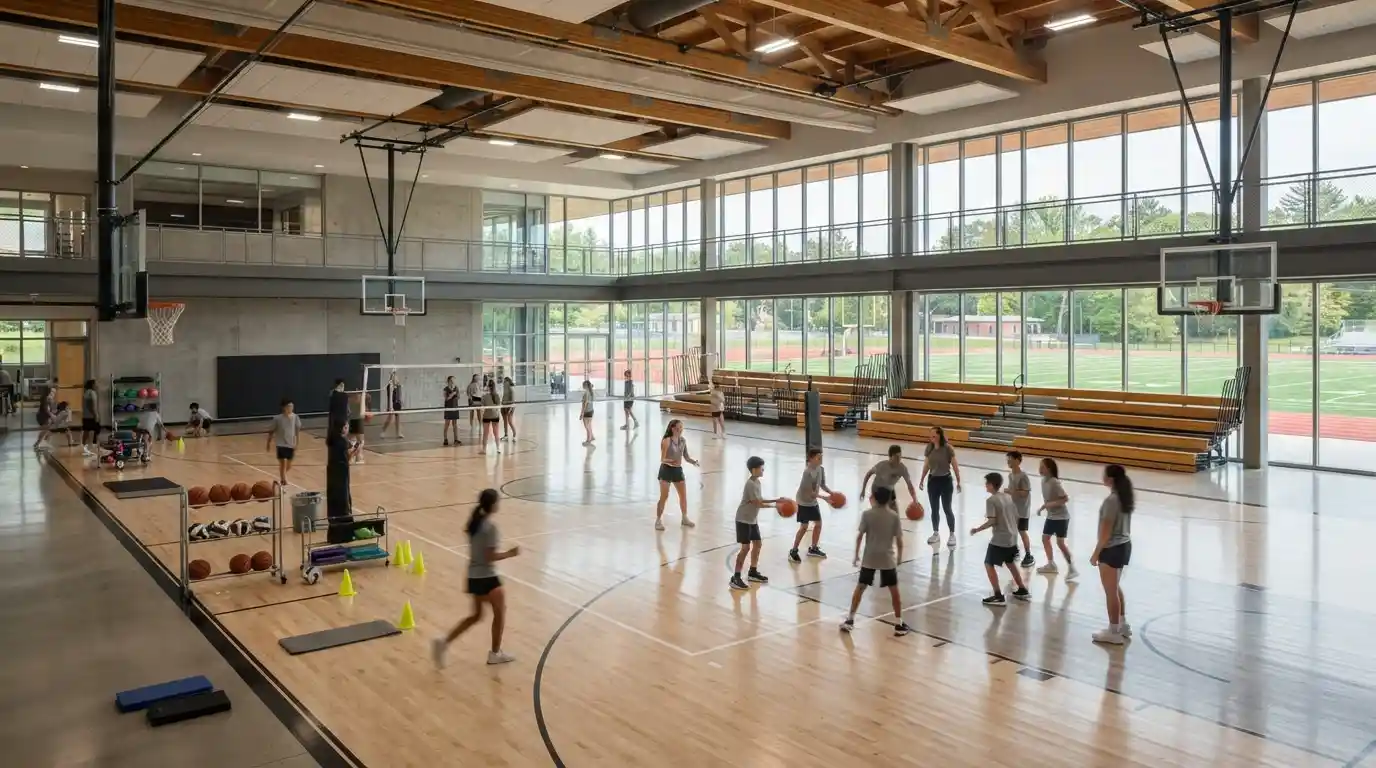
A flexible gymnasium can become the central indoor activity area of a campus. Instead of designing the room around one sport, schools can consider layouts that accommodate basketball, volleyball, badminton, fitness activities, assemblies, physical education lessons, and other programs.
Movable equipment and adaptable court markings can make the space useful for multiple age groups and activities. Good lighting, ventilation, acoustics, durable flooring, and safe circulation routes should also be considered during planning.
2. Dedicated Fitness and Conditioning Area
A fitness area can provide students with opportunities to learn fundamental concepts related to strength, endurance, mobility, balance, and conditioning.
The equipment should match the age and instructional needs of the students rather than simply replicating a commercial adult gym. Spaces can include appropriate resistance equipment, cardio stations, stretching areas, functional movement zones, and instructor-supervised activity areas.
Schools interested in incorporating specialized equipment can also consider how technologies such as a fitness vibration plate fit within the overall facility plan, provided equipment is appropriate for the intended users and supervised properly.
3. Indoor Activity and Training Spaces
Flexible activity rooms can help schools accommodate activities that require smaller groups or specialized setups. These rooms may support dance, movement education, fitness instruction, martial arts, stretching, indoor recreation, or other curriculum-aligned activities.
Creating multiple activity zones can also reduce scheduling conflicts when several classes need access to physical education facilities at the same time.
4. Outdoor Athletic Fields
Outdoor facilities can expand the range of activities available to students. Depending on the campus, a physical education complex may include fields for soccer, football, field hockey, baseball, softball, or other sports.
Outdoor areas should be planned around drainage, surface durability, lighting, safety, maintenance access, spectator circulation, and weather conditions.
For campuses with strong athletic programs, sports-focused resources such as specialized sports activities can help inform broader conversations about how different athletic areas might be used.
5. Running and Walking Areas
A running or walking route can provide a relatively simple way to support cardiovascular activities, warmups, fitness assessments, and recreational movement.
The route does not always need to be a traditional track. Depending on available land, designers can incorporate safe walking and running loops throughout the campus while separating pedestrian activity from vehicle traffic.
6. Locker Rooms and Changing Areas
Locker rooms should be designed with student safety, privacy, accessibility, ventilation, durability, and efficient circulation in mind.
Schools should also consider adequate storage for personal belongings and athletic equipment. Clearly organized spaces can reduce congestion before and after physical education classes and sporting events.
7. Equipment Storage
Storage is often overlooked during facility planning, yet it can have a major effect on daily operations. Balls, nets, mats, cones, training equipment, protective gear, and other supplies require secure and accessible storage.
Storage rooms should be located close to the activity spaces where equipment is used. Adjustable shelving and clearly organized storage systems can make it easier for teachers and coaches to prepare lessons.
Designing for Different Student Needs
A modern physical education complex should not be designed around only the most athletic students. The facility should provide opportunities for students with different interests, abilities, experience levels, and physical needs.
Accessible routes, appropriately designed entrances, adaptable activity areas, and suitable equipment can help create a more inclusive environment. Flexible spaces can also allow teachers to modify activities without completely changing the facility layout.
Schools may also benefit from examining how physical education connects with broader education programs and lifelong learning initiatives.
Safety Should Be Built Into the Design
Safety should be considered from the earliest stages of physical education facility planning rather than added after construction.
Important considerations include:
- Appropriate flooring for different activities
- Safe distances around courts and equipment
- Clear emergency exits
- Accessible pathways
- Proper lighting
- Effective ventilation
- Secure equipment storage
- First-aid access
- Supervision visibility
- Safe spectator circulation
- Regular equipment inspection
Sports-specific protective equipment can also be incorporated where appropriate. For example, activities involving contact or increased impact may require appropriate protective gear such as a sports mouthguard.
Technology in the Modern PE Complex
Technology can make a physical education facility more useful without replacing the role of teachers and coaches. Digital displays, performance-tracking systems, instructional screens, booking software, and appropriate fitness technology can support both instruction and facility management.
Technology can also help educators introduce students to modern approaches to fitness and performance. Schools should nevertheless prioritize technology that directly supports learning or operational efficiency rather than adding equipment simply because it is fashionable.
For institutions interested in broader technology trends, resources covering wearable technology can provide useful context for understanding how digital devices are becoming part of fitness and activity environments.
Creating Flexible Spaces for Multiple Activities
Flexibility is one of the most valuable characteristics of a modern physical education complex. Student interests and curriculum requirements can change over time, so facilities that can accommodate several activities are often easier to adapt.
A large open room, for example, might support physical education instruction during the school day, athletic training later in the afternoon, and community recreation at another time.
Multipurpose spaces can also accommodate different sporting interests. Schools can use resources related to inclusive sports environments when considering how facilities can encourage participation across different student groups.
Connecting Physical Education With Student Wellness
A physical education complex can become part of a wider campus wellness strategy. Physical education, recreational activity, nutrition education, outdoor activity, and healthy lifestyle programs can work together rather than operating as isolated initiatives.
The relationship between exercise and student wellness makes the design of the environment particularly important. Students should have access to spaces that make movement practical, comfortable, and engaging.
Schools can also explore related wellness topics, including holistic wellness approaches, when developing broader student health initiatives.
Planning the Complex Around the Curriculum
Facility planning should begin with the educational program rather than the building itself. Administrators and physical education staff should first identify what students are expected to learn and which activities need dedicated space.
A planning process can include:
- Reviewing the existing physical education curriculum.
- Identifying current facility limitations.
- Estimating student enrollment and future growth.
- Listing required sports and activities.
- Determining indoor and outdoor space requirements.
- Evaluating accessibility needs.
- Planning equipment storage.
- Reviewing safety and supervision requirements.
- Establishing a realistic construction and maintenance budget.
- Creating a phased development plan when necessary.
This approach helps ensure that the finished complex serves an educational purpose instead of becoming a collection of disconnected sports facilities.
Making the Facility Useful Beyond PE Classes
A well-planned complex can serve many campus functions. In addition to scheduled physical education classes, it may support athletic teams, recreational clubs, student events, fitness programs, wellness initiatives, and community activities.
This broader use can increase the value of the investment while encouraging more students to engage with the facility.
Schools can also consider connections between athletics, careers, and specialized education. Resources such as driver education programs demonstrate how educational institutions can provide practical learning opportunities beyond traditional classroom subjects.
How to Make a Physical Education Complex More Sustainable
Sustainability should be considered during both design and operation. Energy-efficient lighting, efficient HVAC systems, durable materials, water-conscious landscaping, and appropriate outdoor surfaces can help reduce long-term operating demands.
Natural daylight can also improve the environment where practical, while shaded outdoor areas can make campus activity spaces more comfortable during warmer conditions.
Durability is equally important. Materials used in high-traffic athletic environments should be selected with maintenance requirements and expected usage levels in mind.
Common Mistakes to Avoid
Designing for One Sport Only
A facility built around one activity may become difficult to use when student interests or program requirements change. Flexible spaces can provide greater long-term value.
Ignoring Storage
Insufficient storage can quickly create clutter and make daily lessons less efficient. Equipment storage should be included in the original design.
Underestimating Accessibility
Accessibility should be integrated into the facility from the beginning. Retrofitting spaces later can be more complicated and expensive.
Choosing Equipment Without an Educational Purpose
Every major piece of equipment should have a clear role in instruction, training, recreation, or facility operations.
Forgetting Future Growth
Campus populations and programs can change. Where possible, planners should consider how the complex could be expanded or reconfigured later.
Building a Better Campus Through Physical Education
A physical education complex can be much more than a gymnasium. When carefully planned, it becomes an important part of the educational environment, supporting movement skills, fitness education, athletic participation, recreation, teamwork, and student wellness.
The strongest approach is to begin with the needs of students and educators, then develop facilities around those needs. Flexible spaces, appropriate equipment, accessibility, safety, technology, storage, and long-term maintenance should all be considered together.
Schools can also learn from developments across sports, education, wellness, and technology. Related resources on transformative education, sports nutrition, and wearable technology highlight how different areas can complement a modern physical education strategy.
Ultimately, the goal is to create a campus environment where physical activity is accessible, purposeful, safe, and engaging. With thoughtful planning, a modern physical education complex can support students today while remaining adaptable to the needs of future generations.