Located on Baxter Street in Athens, the center is designed around outpatient imaging, giving patients an alternative to hospital-based diagnostic imaging for many examinations. The facility also incorporates advanced imaging equipment and technologies intended to support detailed scans while making the experience more convenient for patients.
What Is American Health Imaging Athens?
American Health Imaging of Athens is an outpatient medical imaging center serving patients who need diagnostic examinations ordered by their healthcare providers. Its services cover several major imaging modalities, allowing patients to receive different types of diagnostic scans in one dedicated imaging environment.
The center is part of the broader American Health Imaging network, which operates diagnostic imaging facilities across several states. For patients researching medical imaging options, understanding the available technology, examination types, scheduling process, and patient experience can make it easier to prepare for an appointment.
For additional healthcare-related information, readers may also explore comprehensive healthcare services at AZA Health St. Augustine and the discussion of patient-centered medical care.
Diagnostic Imaging Services Available in Athens
Different imaging technologies provide different types of information. The appropriate examination depends on the patient’s symptoms, medical history, and the healthcare provider’s diagnostic needs.
MRI Scans
MRI uses a magnetic field and radio waves to produce detailed images of structures inside the body. It can be used for many different clinical applications, including examinations involving the brain, joints, spine, and soft tissues.
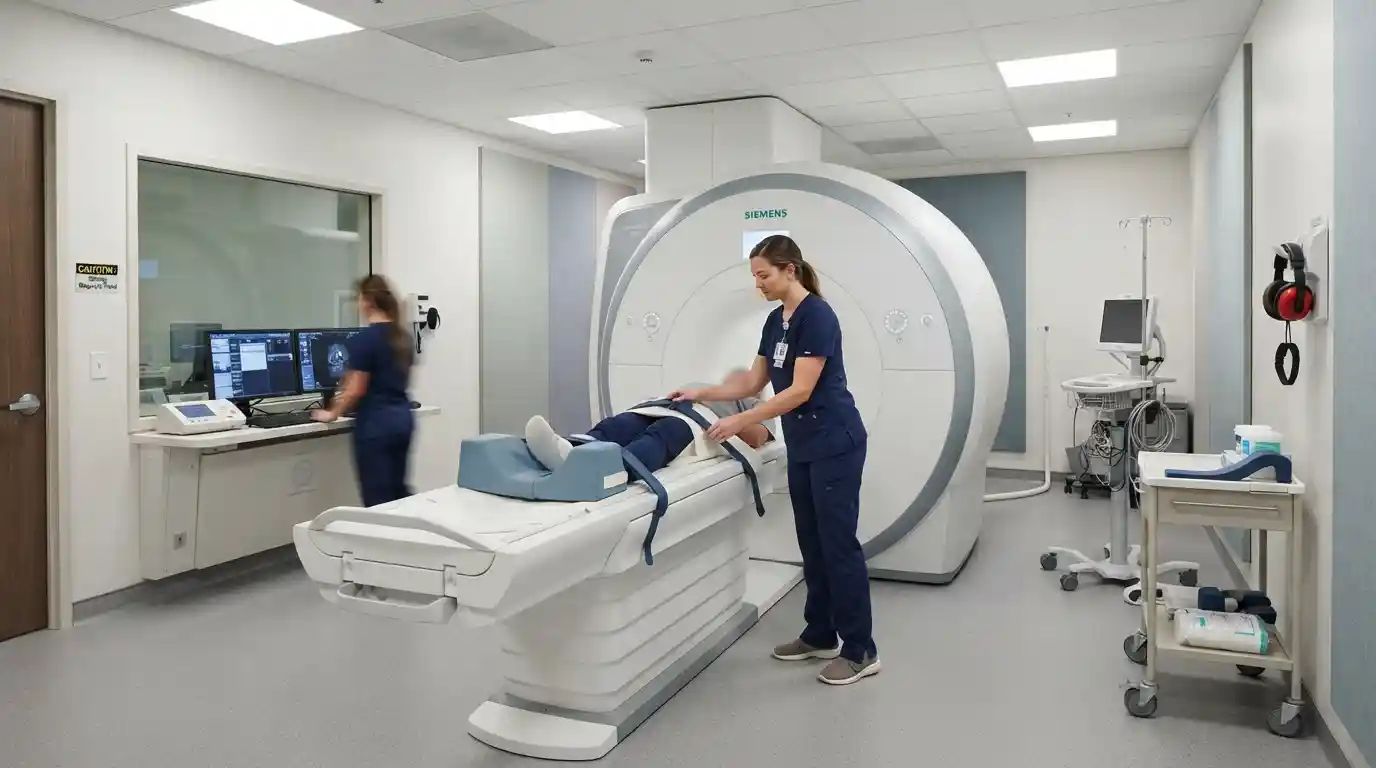
The Athens location offers a 1.5T wide-bore MRI system. A wider opening can provide additional space compared with some traditional MRI designs, which may be useful for patients who experience discomfort or anxiety during imaging.
Patients interested in the broader role of advanced imaging can also read about medical assessment and diagnostic learning.
CT Scans
Computed tomography combines X-ray images taken from multiple angles to create cross-sectional views of the body. CT examinations can provide detailed information about bones, organs, blood vessels, and other structures.
The Athens center features a 16-slice CT scanner. CT technology can be particularly useful when physicians need detailed cross-sectional information within a relatively short examination.
Digital X-Ray
Digital X-ray imaging uses electromagnetic radiation to create images of internal structures. X-rays are widely used for evaluating bones and certain other areas of the body and are often among the most familiar forms of diagnostic imaging.
The examination selected by a healthcare provider depends on what needs to be evaluated. A physician may choose X-ray, CT, MRI, ultrasound, or another modality based on the clinical question.
Ultrasound
Ultrasound, also called sonography, uses high-frequency sound waves to produce images of internal structures. Because it does not use ionizing radiation, ultrasound is commonly used for a variety of soft-tissue and abdominal examinations and has important applications in pregnancy care.
The Athens center provides ultrasound imaging as part of its diagnostic imaging services.
Cardiac Calcium Scoring
Cardiac calcium scoring is a specialized CT-based examination that measures calcified plaque in the coronary arteries. The resulting information can help a healthcare professional assess cardiovascular risk in appropriate patients.
Because cardiac screening decisions depend on individual circumstances, patients should discuss whether this type of examination is appropriate with their healthcare provider.
Low-Dose CT Lung Cancer Screening
Low-dose CT lung cancer screening is designed to identify potential signs of lung cancer at an earlier stage in eligible individuals. Screening eligibility depends on factors such as age, smoking history, and other risk considerations, so patients should discuss screening recommendations with their healthcare professional.
NeuroQuant Brain Imaging
The Athens center also offers NeuroQuant brain imaging in conjunction with MRI. This technology provides quantified measurements of brain tissues that can add information to the imaging assessment.
Technology continues to influence how medical professionals collect, interpret, and use diagnostic information. Readers interested in the broader relationship between healthcare and technology can also explore how artificial intelligence is being applied in technology and the risks associated with outdated software.
Advanced Imaging Technology at the Athens Center
Modern diagnostic imaging depends not only on the type of examination but also on the equipment used to acquire images. American Health Imaging of Athens lists several technologies intended to support image quality and patient comfort.
1.5T Wide-Bore MRI
A 1.5 Tesla MRI system uses a strong magnetic field to generate detailed images. The wide-bore design provides a larger opening than some conventional MRI systems, potentially making the examination more comfortable for certain patients.
16-Slice CT
A 16-slice CT scanner can acquire multiple image slices during a scan and combine them to produce detailed cross-sectional views. This technology is useful for examinations where physicians need information about internal structures in a relatively efficient manner.
Faster MRI Scanning Technology
Faster scanning technology can reduce the amount of time a patient spends undergoing an MRI examination. Shorter scan times may be particularly valuable for patients who experience anxiety, discomfort, or difficulty remaining still for extended periods.
The use of technology in healthcare is part of a much broader transformation. For another perspective on healthcare technology and infrastructure, see healthcare infrastructure and technology.
Why Imaging Accuracy Matters
Diagnostic imaging provides visual information that healthcare professionals can use alongside medical histories, physical examinations, laboratory results, and other clinical data. Clear images can help physicians evaluate anatomical structures and identify findings that may require additional investigation.
Accuracy is not simply about producing a picture. The imaging examination must be appropriate for the clinical question, performed correctly, and interpreted within the proper medical context.
American Health Imaging states that its network works with subspecialized radiologists. Specialized radiological expertise can be relevant when interpreting complex examinations because different areas of diagnostic imaging require different forms of clinical knowledge.
Patient Experience and Convenience
Medical imaging can be stressful for some patients, particularly when they are unfamiliar with the examination or concerned about what the results might show. A patient-focused imaging environment can therefore be an important part of the overall experience.
American Health Imaging’s Athens location promotes same-day and next-day appointment availability, subject to scheduling and examination requirements. The center also provides several imaging services at one location, potentially reducing the need to visit different facilities for different types of diagnostic scans.
Patients researching healthcare and wellness topics can also read about wellness and healthcare approaches and holistic wellness and healthcare.
Understanding the Cost of Diagnostic Imaging
The cost of an imaging examination can vary based on the type of scan, insurance coverage, the patient’s plan, and other factors. Outpatient imaging centers may offer a different cost structure from hospital-based imaging, although patients should confirm their individual financial responsibility before an examination.
American Health Imaging states that its centers are in-network with many major insurance plans and may provide cost savings compared with hospital-based imaging. Actual patient costs depend on insurance benefits, deductibles, copayments, coinsurance, and the specific examination.
For broader information about healthcare-related financial considerations, readers can also explore financial planning considerations and digital marketing for medical firms.
How to Prepare for an Imaging Appointment
Preparation requirements vary significantly by examination. Some scans may require patients to avoid eating or drinking for a specific period, while others may require particular clothing or preparation instructions.
Patients should follow the instructions provided when scheduling their examination. It is also useful to bring relevant identification, insurance information, referral documentation when required, and information about current medications or medical conditions when requested.
Patients undergoing MRI should inform the imaging team about implanted medical devices, metal fragments, or other relevant medical information before entering the MRI environment. MRI uses a strong magnetic field, so safety screening is an essential part of the process.
What Patients Should Know Before Their Scan
Knowing what to expect can make an imaging appointment easier. Patients should ask their healthcare provider or imaging center about preparation instructions, expected examination duration, whether contrast material will be used, and when results will be available.
For patients who experience anxiety about MRI examinations, discussing concerns with the imaging staff before the scan can be helpful. The wide-bore MRI configuration available at the Athens center is one of the features designed to provide additional space during certain MRI examinations.
Healthcare technology also continues to expand beyond diagnostic imaging. For example, readers interested in technology’s wider role in professional environments can explore AI workflows and modern technology.
American Health Imaging Athens and Modern Outpatient Care
Outpatient diagnostic imaging has become an important part of modern healthcare because imaging can provide physicians with information needed to evaluate symptoms, investigate medical concerns, monitor conditions, and plan appropriate care.
A dedicated imaging center can also create a focused environment around diagnostic examinations. American Health Imaging of Athens combines several major imaging modalities with specialized equipment and an outpatient setting.
Patients can also learn more about related healthcare topics by exploring health and lifestyle services and mental health clinic services.
Choosing the Right Imaging Service
The right diagnostic examination is determined by the medical question being investigated rather than by the technology that appears most advanced. MRI, CT, X-ray, ultrasound, and specialized examinations each have different applications.
Patients should therefore rely on their healthcare provider’s recommendation and the imaging center’s professional guidance when determining which examination is appropriate. Understanding the differences between imaging modalities can nevertheless help patients participate more confidently in conversations about their healthcare.
Final Thoughts
American Health Imaging of Athens provides a range of outpatient diagnostic imaging services, including MRI, CT, ultrasound, digital X-ray, cardiac calcium scoring, low-dose CT lung cancer screening, and NeuroQuant brain imaging. Its wide-bore MRI, CT technology, and faster scanning capabilities reflect the continuing development of diagnostic imaging.
For patients in Athens, Georgia, researching diagnostic imaging options, the most important considerations include the examination recommended by their healthcare provider, preparation requirements, insurance coverage, appointment availability, and the technology appropriate for their particular diagnostic needs.
Medical imaging is one part of a larger healthcare process. The images themselves are interpreted alongside a patient’s symptoms, medical history, examination findings, and other clinical information to help healthcare professionals determine appropriate next steps.