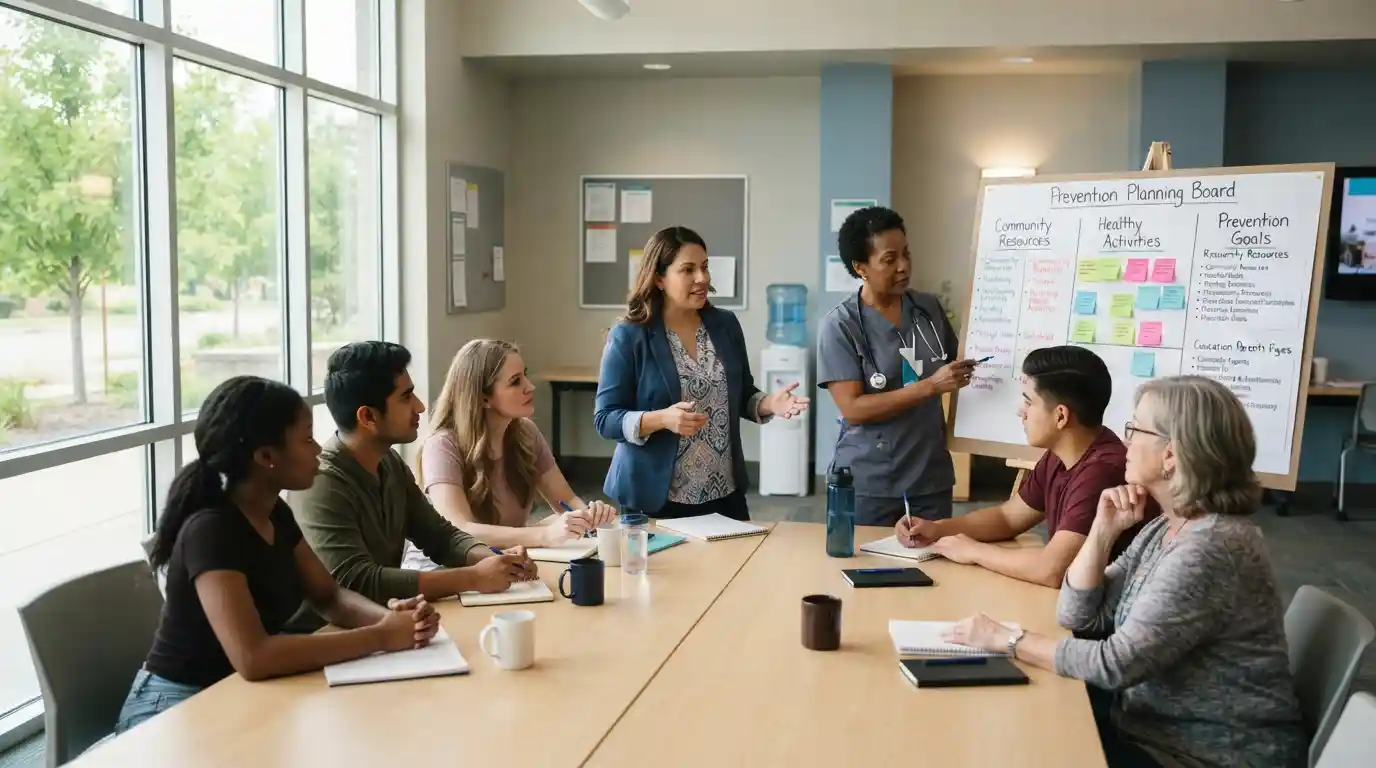
A strong local initiative should be practical, community-specific, measurable, and sustainable. Rather than copying a program designed for another city, organizers should first understand the conditions affecting their own community and then build a coordinated prevention strategy around those findings.
This step-by-step guide explains how to create a local meth prevention program, from assessing community needs and building partnerships to designing prevention activities, measuring outcomes, and maintaining long-term engagement.
What Is a Local Meth Prevention Program?
A local meth prevention program is a coordinated community effort designed to prevent or delay methamphetamine use and reduce factors that can contribute to substance misuse. Depending on local needs, the program may include education, youth activities, family engagement, community outreach, early intervention, referral pathways, and partnerships with healthcare or behavioral health organizations.
The strongest programs do not treat prevention as a single event. Instead, they establish an ongoing process that connects community education with practical support and measurable objectives.
Prevention can also overlap with broader community health initiatives. For example, communities developing mental health support systems may be able to coordinate prevention messaging and referral pathways with local behavioral health providers.
Why Local Meth Prevention Matters
Methamphetamine use can affect individuals, families, schools, workplaces, healthcare systems, and broader communities. A local prevention strategy allows communities to address the specific conditions and populations that need attention rather than relying on a generic message.
Local programs can help communities:
- Improve awareness of substance-use risks.
- Strengthen family and community protective factors.
- Give young people healthy alternatives and supportive relationships.
- Connect vulnerable individuals with appropriate services.
- Improve communication between community organizations.
- Identify prevention priorities using local information.
- Measure whether prevention activities are producing meaningful results.
Prevention is particularly valuable when it is integrated into existing community systems rather than operated as an isolated campaign.
Step 1: Assess the Local Community
The first step is understanding the problem you are trying to address. Before launching posters, workshops, school presentations, or social campaigns, gather information about substance-use patterns, community concerns, available services, and populations that may require additional support.
Look at available information from local health agencies, schools, community organizations, healthcare providers, law enforcement where appropriate, and other reliable sources. Consider both substance-use indicators and broader community conditions that may influence risk.
Questions to Ask During the Assessment
- What substance-use concerns are most significant locally?
- Which age groups or populations require additional prevention attention?
- What risk factors are visible in the community?
- What protective factors already exist?
- Which prevention services are already available?
- Where are the gaps in education, support, or referrals?
- What do parents, educators, healthcare professionals, and young people identify as priorities?
Community assessment should also consider social conditions. A broader understanding of community and social dynamics can help organizers recognize factors that may influence prevention priorities.
Step 2: Define the Prevention Goal
Once the community assessment is complete, turn the findings into a clear prevention goal. Avoid vague objectives such as “stop meth use.” Instead, identify what the program will change, who it will serve, and how progress will be measured.
For example, a local program might focus on improving youth awareness, strengthening parent communication, increasing participation in healthy after-school activities, or improving connections between at-risk residents and support services.
A clear goal makes it easier to select appropriate activities and evaluate whether the program is working.
Step 3: Build a Local Prevention Coalition
One organization rarely has all the resources required for a comprehensive prevention initiative. Build a coalition that includes people and organizations with different forms of expertise and community access.
Potential partners may include:
- Schools and educators
- Parents and caregivers
- Youth organizations
- Healthcare providers
- Mental health professionals
- Community nonprofits
- Faith and community organizations
- Local government representatives
- Public health professionals
- Law enforcement and public safety representatives
- Local businesses
- Sports and recreation organizations
Community partnerships are especially useful when prevention programs need to reach different audiences. Organizations already working in local healthcare environments or home and family support services may provide valuable connections to residents who could benefit from prevention information.
Step 4: Identify Risk and Protective Factors
A good prevention program should address more than knowledge about drugs. It should consider why certain people or groups may be more vulnerable and what conditions can help protect them.
Potential risk factors may include social isolation, poor school engagement, family instability, exposure to violence, untreated behavioral health concerns, limited access to positive activities, and other community-specific conditions.
Protective factors can include supportive family relationships, positive peer networks, school engagement, mentorship, extracurricular activities, accessible healthcare, community belonging, and healthy recreational opportunities.
Understanding these factors helps organizers develop a program that strengthens the community rather than simply warning people about drugs.
Step 5: Choose the Target Audiences
Not every prevention message should be delivered to everyone in exactly the same way. Identify the audiences most relevant to the local goal.
Youth
Youth programs can focus on age-appropriate education, healthy decision-making, mentoring, positive relationships, school engagement, and meaningful extracurricular activities.
Communities can also strengthen youth opportunities through education-focused initiatives, structured activities, and community learning programs.
Parents and Caregivers
Parents can benefit from practical information about communication, supervision, warning signs, healthy boundaries, and where to seek professional support.
Educators
Teachers and school staff can receive training on prevention communication, referral procedures, student support, and ways to connect young people with appropriate resources.
Community Organizations
Nonprofits, recreational organizations, healthcare groups, and other community institutions can help extend prevention activities beyond schools and formal healthcare settings.
Step 6: Develop Evidence-Informed Prevention Activities
Choose activities that directly support your defined goals. Avoid filling the calendar with events simply because they are easy to organize.
Possible activities include:
- Community education sessions
- Parent workshops
- Youth leadership programs
- School-based prevention education
- Mentoring opportunities
- After-school activities
- Community discussions
- Public awareness campaigns
- Healthcare referral partnerships
- Training for community professionals
- Resource fairs
- Youth recreation and engagement programs
Education should be practical and age appropriate. Rather than relying entirely on fear-based messaging, explain healthy decision-making, available support, consequences of substance misuse, and ways people can seek help.
Programs that combine prevention education with positive opportunities can also connect naturally with existing physical education and activity initiatives and other structured community programs.
Step 7: Create a Youth Engagement Strategy
Youth should not be treated only as recipients of prevention messages. When appropriate, they can contribute ideas, help shape activities, and participate in peer-oriented initiatives.
Consider creating youth advisory groups or leadership opportunities where young people can discuss the challenges they see in their schools and communities.
Healthy activities can provide additional protective opportunities. Sports, recreation, mentoring, arts, and educational programs can help young people develop relationships and skills while increasing their connection to positive community environments.
Programs can draw inspiration from existing community sports organizations and other structured activities when developing locally appropriate engagement opportunities.
Step 8: Develop Family and Community Education
Community education should make information understandable and actionable. Residents should leave a workshop knowing what they learned, why it matters, and what they can do next.
Useful topics may include:
- Understanding methamphetamine and substance-use risks
- How prevention works
- How families can communicate about substance use
- How to identify local support resources
- How to encourage healthy youth development
- How to respond when someone needs professional assistance
Community discussions can also address broader social concerns. For organizations developing educational material about community values and civic engagement, resources such as ethical and community-focused initiatives can provide useful context for broader conversations about responsibility and community wellbeing.
Step 9: Establish Clear Referral Pathways
Prevention programs should not attempt to provide clinical treatment unless the organization is properly qualified and authorized to do so. Instead, establish clear pathways for people who need additional help.
Create a current directory of relevant local resources, which may include behavioral health providers, treatment services, healthcare organizations, crisis resources, family support organizations, and other appropriate services.
Make sure coalition members understand where to direct someone who requests help. A prevention campaign becomes more useful when people know what action to take after receiving information.
Organizations working across health and wellness can also coordinate with health education and assessment resources where appropriate.
Step 10: Create a Communication Plan
A prevention program needs consistent communication. Develop a communication plan before launching public activities.
Decide:
- Who needs to receive each message?
- Which communication channels will reach them?
- Who approves public-facing information?
- How frequently will messages be shared?
- How will misinformation be handled?
- How will privacy and dignity be protected?
Possible channels include community meetings, schools, newsletters, social media, local websites, community centers, healthcare organizations, and partner communications.
Organizations with broader communication needs can also review digital marketing strategies when developing responsible outreach campaigns.
Step 11: Make Prevention Messages Responsible
Substance-use communication requires careful wording. Avoid sensationalism, stigmatizing language, unsupported claims, or imagery that could unintentionally glamorize drug use.
Messages should focus on health, safety, prevention, support, and practical action.
It is also important to avoid presenting people who use substances as morally defective. Prevention works better when communication encourages people to seek support and helps communities understand substance use as a complex public health issue.
Community campaigns can benefit from understanding broader social issues and public communication challenges when developing sensitive educational material.
Step 12: Train the People Delivering the Program
Everyone involved should understand the program’s goals, responsibilities, communication standards, referral procedures, and privacy expectations.
Training can be tailored to each role. Teachers may need different information from healthcare professionals, youth mentors, parents, or community volunteers.
Training should also explain the limits of each participant’s role. Volunteers should know when to provide information and when to refer someone to a qualified professional.
Step 13: Build a Sustainable Budget
Prevention programs need realistic financial planning. Identify the costs associated with staff time, training, educational materials, events, communication, transportation, evaluation, technology, and other operational needs.
Potential funding sources may include local government programs, nonprofit partnerships, foundations, community fundraising, grants, and organizational contributions. Eligibility requirements and funding rules vary, so organizers should verify current requirements before applying.
Budget planning should also distinguish between one-time launch expenses and recurring costs. A program that cannot maintain its core activities after the first year may need a different operating model.
Step 14: Create Measurable Objectives
Define measurable objectives before activities begin. Objectives should explain what the program expects to accomplish within a specific period.
Examples include:
- Increase participation in prevention workshops.
- Increase parent awareness of available resources.
- Increase youth participation in positive extracurricular activities.
- Increase referrals to appropriate support services.
- Improve knowledge of prevention resources among participating groups.
- Strengthen collaboration between coalition partners.
Strong objectives allow organizers to determine whether the program is producing meaningful progress instead of simply counting how many events were held.
Step 15: Evaluate the Program
Evaluation should be planned before implementation rather than added at the end. Decide what information you will collect and how it will be used.
You might measure:
- Participation levels
- Knowledge changes
- Community engagement
- Partnership development
- Referral activity
- Youth engagement
- Parent participation
- Progress toward defined objectives
Evaluation does not need to be unnecessarily complicated. Surveys, interviews, attendance records, focus groups, partner feedback, and other practical methods can help determine what is working.
Organizations with broader evaluation or healthcare interests can also explore health-focused assessment approaches for ideas about structured information gathering.
Step 16: Improve the Program Over Time
Community prevention should be treated as an ongoing process rather than a finished project. Review the results regularly and determine what should be continued, changed, expanded, or discontinued.
Ask coalition members:
- Which activities generated the strongest participation?
- Which audiences were difficult to reach?
- What feedback did participants provide?
- Where are referral gaps?
- Which partnerships became stronger?
- What new community needs have emerged?
Continuous improvement helps keep the program relevant as community conditions change.
How to Keep the Program Community-Centered
A prevention program should reflect the community it serves. Avoid assuming that strategies that work in one location will automatically work in another.
Invite community members to contribute during planning, implementation, and evaluation. Listen to parents, young people, educators, healthcare professionals, community organizations, and other local stakeholders.
Community-centered planning can also benefit from understanding nonprofit leadership and organizational responsibilities, particularly when a coalition needs to coordinate multiple organizations and maintain long-term accountability.
Common Mistakes to Avoid
1. Starting Without a Community Assessment
Launching activities without understanding local needs can result in wasted resources and low participation.
2. Relying Only on Fear-Based Messages
Scare tactics alone do not create a comprehensive prevention strategy. Messages should provide practical information, healthy alternatives, and pathways to support.
3. Ignoring Youth Perspectives
Young people can provide valuable insight into communication channels, social pressures, and activities that actually engage their peers.
4. Treating Prevention as a One-Time Event
A single presentation or awareness day is unlikely to replace a coordinated, sustained prevention strategy.
5. Failing to Establish Referral Options
People who recognize a need for help should have a clear next step rather than being left with general information.
6. Measuring Only Attendance
Attendance matters, but it does not tell you whether the program achieved its intended outcomes.
7. Working in Isolation
Partnerships increase the reach and resources available to a local prevention initiative.
Building a Long-Term Prevention Network
The most sustainable programs become part of the community’s broader support network. Instead of operating as a temporary campaign, the initiative can develop ongoing relationships among schools, families, healthcare organizations, nonprofits, youth programs, public agencies, and other stakeholders.
That network can make it easier to respond when community needs change. It can also create opportunities to connect prevention with education, wellness, recreation, family support, and other community priorities.
For example, local organizations already involved in sports and youth wellness, educational programs, or family services may become valuable prevention partners without turning their existing services into drug-prevention programs.
A Simple Local Meth Prevention Program Framework
For organizations that need a straightforward starting point, the process can be summarized as follows:
- Assess local substance-use and community conditions.
- Identify priority populations and prevention needs.
- Define specific goals and measurable objectives.
- Build a diverse local coalition.
- Identify risk and protective factors.
- Select evidence-informed prevention activities.
- Engage youth, families, schools, and community organizations.
- Create clear referral pathways.
- Develop responsible communication materials.
- Train program participants and staff.
- Create a realistic budget and sustainability plan.
- Implement activities consistently.
- Measure participation, outcomes, and community feedback.
- Use evaluation findings to improve the program.
- Maintain partnerships and update the strategy as local needs change.
Final Thoughts
Learning how to create a local meth prevention program step by step begins with recognizing that prevention is a community-wide effort. The strongest initiatives are based on local needs, supported by diverse partnerships, designed around realistic goals, and evaluated continuously.
Rather than focusing on one awareness campaign, communities can build a connected prevention system that combines education, youth engagement, family support, healthy activities, professional referrals, and ongoing evaluation.
With careful planning and sustained collaboration, local organizations can create prevention efforts that are practical, respectful, measurable, and responsive to the needs of the people they serve.