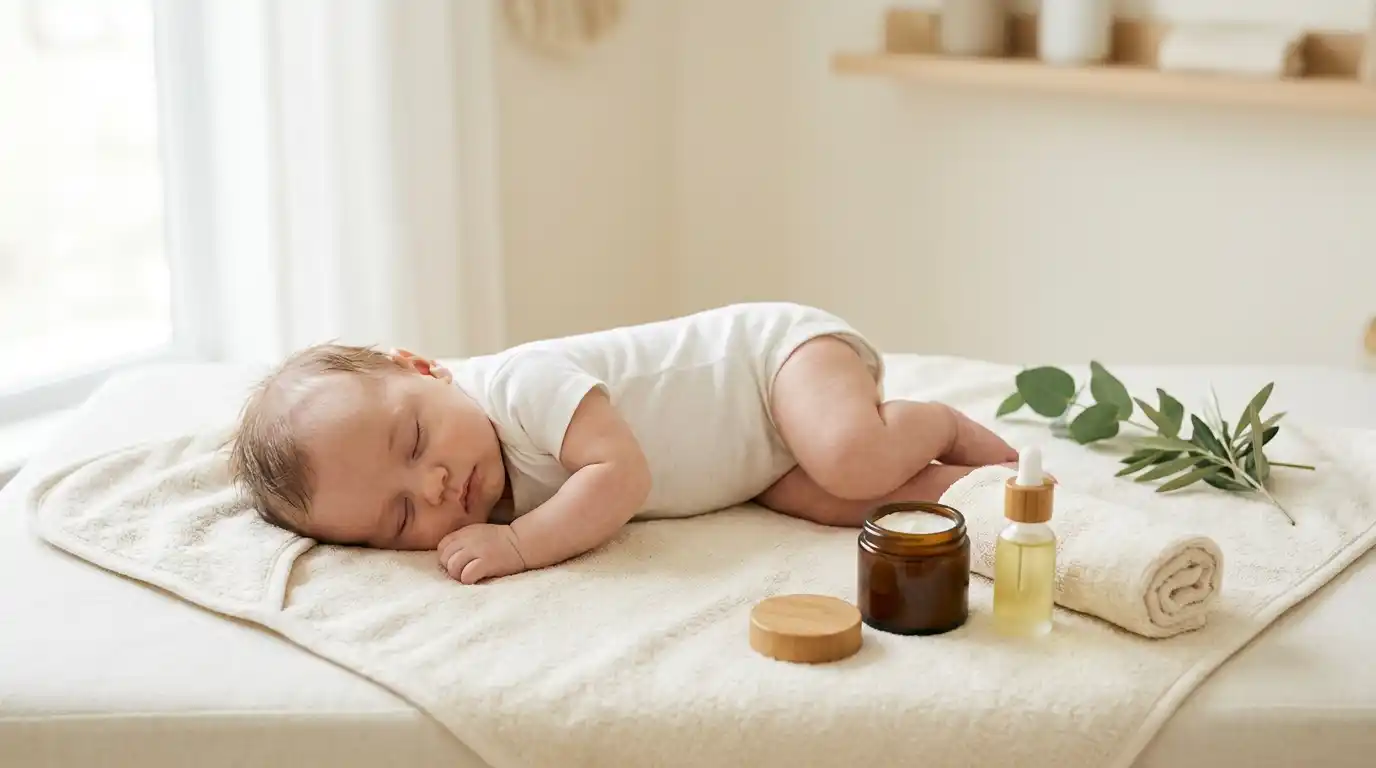
Choosing skincare for a baby can feel surprisingly complicated. Shelves are filled with products labelled organic, natural, plant-based, hypoallergenic, and gentle. Although these descriptions may sound reassuring, they do not automatically mean a product is suitable for a newborn or an infant with sensitive skin.
What Is Organic Baby Skincare?
Organic baby skincare generally refers to personal-care products formulated with ingredients grown or produced under organic standards. Depending on the product, these ingredients may include plant-derived oils, botanical extracts, and other naturally sourced materials.
However, organic is not a universal guarantee of safety. A naturally derived fragrance or essential oil can still irritate delicate skin, while a carefully formulated product containing conventional ingredients may be well tolerated.
Parents should distinguish between three important considerations:
- Ingredient sourcing: Whether ingredients are organic, conventionally grown, or synthetically produced.
- Skin compatibility: Whether the complete formulation is gentle enough for the baby’s skin.
- Product quality: Whether the product is properly manufactured, labelled, and appropriate for the baby’s age.
These distinctions matter more than attractive packaging or natural-sounding marketing claims.
Why Is a Baby’s Skin So Delicate?
Infant skin is still developing and can be more vulnerable to dryness, irritation, and moisture loss than adult skin. Frequent washing, friction, saliva, drool, and prolonged contact with a wet diaper can contribute to irritation.
A gentle routine supports the skin’s natural protective barrier. It does not need to involve multiple cleansers, scented lotions, exfoliating products, or complicated treatments.
Parents exploring broader personal-care hygiene can also read our guide to preventing mould on beauty blenders, which discusses keeping personal-care tools clean. The specific products and methods used for adults should not automatically be applied to infants.
How to Choose Organic Baby Skincare Products
1. Read the Complete Ingredient List
Do not rely exclusively on the words organic, natural, clean, or botanical. Check the full ingredient list and look for ingredients your baby has previously tolerated.
Fragrance, essential oils, and certain botanical extracts may cause irritation or allergic reactions in some children. Products labelled fragrance-free are generally a sensible starting point for sensitive skin. Unscented does not always mean fragrance-free.
2. Choose a Gentle Cleanser
A mild, fragrance-free baby cleanser can help remove dirt without unnecessarily stripping the skin’s natural oils. Use it only where needed, rinse thoroughly, and avoid scrubbing.
Newborns generally do not need frequent full baths. Two or three baths a week are often sufficient when the diaper area, face, and other soiled areas are cleaned as needed.
3. Select a Suitable Moisturiser
If your baby’s skin feels dry, consider a fragrance-free cream or ointment designed for infants. Apply it after bathing while the skin is still slightly damp.
Thicker creams and ointments can be more effective than lightweight lotions for dry skin. However, the right choice depends on the baby’s skin condition and the product formulation.
4. Understand Organic Certification
Certification can help verify certain claims about ingredient sourcing, but standards vary by certification programme and product category. Check what a certification actually covers rather than assuming that every ingredient or finished product has been certified organic.
For additional perspective on the relationship between beauty products and personal care, explore beauty and personal-care routines. Remember that products intended for adult cosmetic use are not necessarily appropriate for babies.
Ingredients and Products to Approach Carefully
Natural ingredients can be useful, but they are not automatically harmless. Before introducing a new product, consider its intended use, formulation, and suitability for your baby’s age.
- Fragrances and essential oils: These can irritate sensitive skin. Avoid adding concentrated essential oils to bathwater or applying them directly to a baby’s skin.
- Harsh cleansers: Strong soaps and frequent washing can contribute to dryness.
- Exfoliating products: Scrubs, adult facial acids, and other exfoliants are unnecessary for routine infant skincare.
- Baby powder: Avoid loose powders that can become airborne and be inhaled.
- Unverified homemade mixtures: Kitchen ingredients and homemade botanical preparations may irritate skin or become contaminated.
Do not assume that a product is safe simply because it contains coconut oil, almond oil, aloe vera, chamomile, or another familiar natural ingredient. Individual reactions vary, and some ingredients may not be appropriate for every baby.
A Simple Daily Organic Baby Skincare Routine
Healthy baby skincare is usually about consistency rather than the number of products used.
During the Morning
Gently clean your baby’s face when needed, paying attention to areas around the mouth and neck where milk, saliva, and moisture can collect. Pat the skin dry rather than rubbing it. Apply a suitable fragrance-free moisturiser if the skin is dry.
During Diaper Changes
Change wet or dirty diapers promptly. Clean the area gently, allow the skin to dry, and use a suitable barrier cream when needed. Zinc oxide-based diaper creams can help protect skin from moisture and friction.
If redness develops, avoid vigorous wiping and fragranced products. Persistent or worsening irritation may require assessment by a paediatrician.
At Bath Time
Use lukewarm water and a mild, fragrance-free cleanser only where necessary. Keep baths brief and support your baby securely throughout the process. Never leave a baby unattended in or near water.
For newborns, follow appropriate umbilical-cord care instructions until the stump has fallen off and healed. Sponge baths are generally recommended during this period.
Does Organic Baby Skincare Help With Eczema?
Organic skincare products are not a treatment for eczema, and natural ingredients may sometimes aggravate the condition. Babies with eczema often benefit from a consistent routine using fragrance-free moisturisers and gentle cleansers.
Avoid experimenting with multiple new products during a flare-up. If the skin becomes persistently itchy, inflamed, cracked, or uncomfortable, ask your baby’s healthcare professional for advice. A clinician can help identify possible triggers and recommend suitable treatment when necessary.
Parents should also remember that skincare products cannot replace medical evaluation when a rash is severe, spreading, painful, or accompanied by fever or other concerning symptoms.
Protecting Your Baby’s Skin Beyond Skincare Products
Healthy skin depends on more than creams and cleansers. Everyday habits can make a meaningful difference.
- Wash new baby clothes, towels, and bedding before use.
- Consider fragrance-free laundry detergent and avoid heavily scented fabric products.
- Choose soft, breathable clothing and reduce unnecessary friction.
- Protect your baby from excessive sun exposure using shade and suitable clothing.
- Keep the nursery comfortable and avoid overheating.
- Introduce new skincare products cautiously and discontinue products that appear to cause irritation.
A clean, comfortable home can support a practical baby-care routine. For wider household considerations, see our article on understanding home services and our guide to home additions and living spaces. These resources provide general household context rather than infant-specific medical advice.
Common Myths About Organic Baby Skincare
Myth 1: Natural Products Never Cause Allergies
Natural ingredients can cause irritation or allergic reactions. Always consider the complete formulation and your baby’s individual sensitivity.
Myth 2: More Products Mean Better Skin
Babies generally need only a few carefully selected products. Adding unnecessary oils, fragrances, and treatments can increase exposure to potential irritants.
Myth 3: Organic Products Can Treat Every Skin Problem
Organic products do not automatically treat eczema, infections, or persistent rashes. Medical conditions may require specific treatment from a qualified healthcare professional.
Myth 4: Expensive Products Are Always Better
Price does not establish safety or effectiveness. A simple, appropriately formulated product may be more suitable than an expensive product with numerous botanical extracts and fragrances.
When Should You Seek Professional Advice?
Contact your baby’s paediatrician if a rash persists, repeatedly returns, worsens after using a product, or interferes with feeding or sleep. Seek prompt medical attention for widespread blistering, signs of infection, significant swelling, or a rash accompanied by fever or unusual lethargy.
Breathing difficulty or swelling of the lips or tongue after exposure to a product requires emergency medical care.
Professional advice is particularly important when choosing products for premature infants or babies with diagnosed skin conditions, known allergies, or extensive skin irritation.
Final Thoughts
Organic baby skincare can appeal to parents who prefer products made with organically sourced ingredients, but the organic label alone does not determine whether a product is safe or suitable for an infant.
Prioritise fragrance-free formulations, gentle cleansing, appropriate moisturising, careful ingredient checks, and simple daily habits. Introduce products cautiously and seek professional advice when skin problems persist.
The goal is not to create a complicated skincare routine. It is to protect your baby’s delicate skin with thoughtful choices that are appropriate for their age and individual needs.