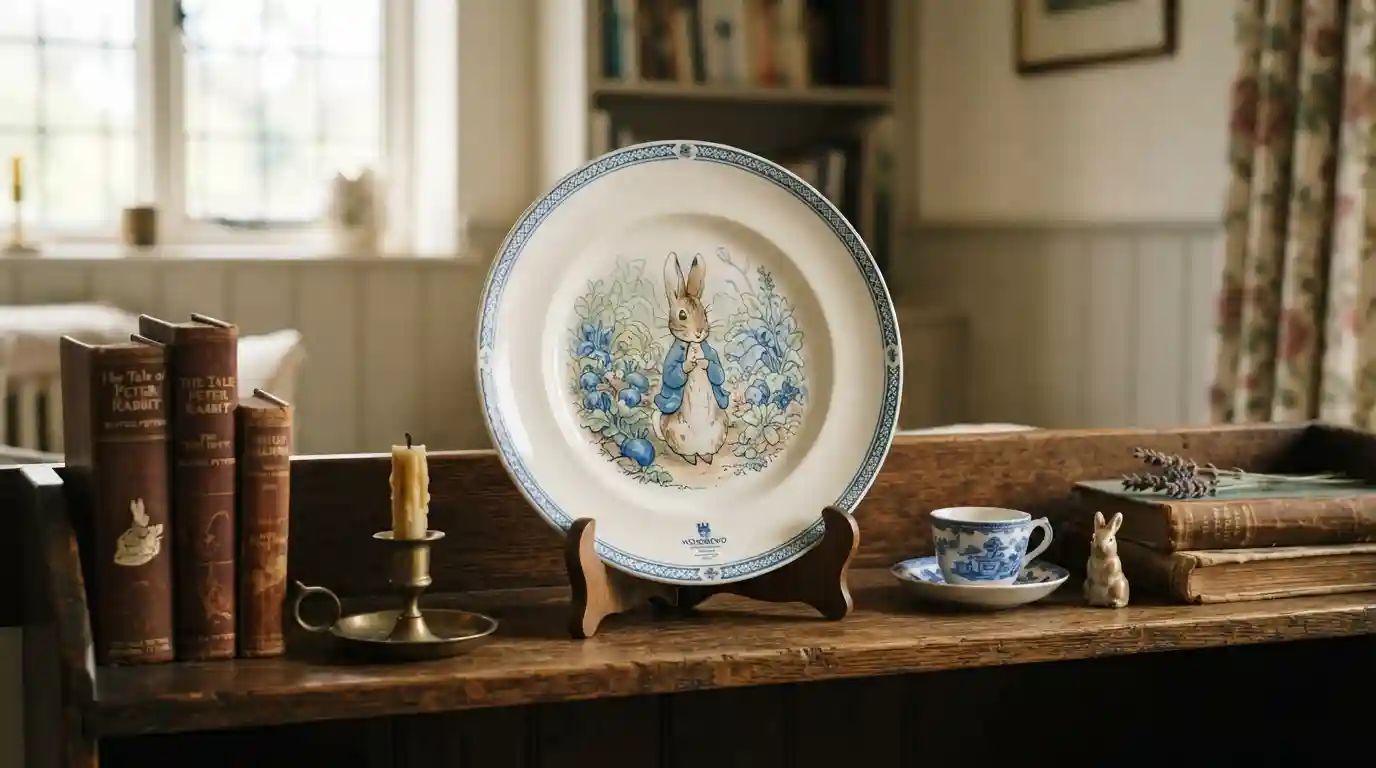
Whether you are discovering one at an estate sale, building a collection of character-themed ceramics, or looking for an elegant display piece, understanding what makes these plates interesting can help you appreciate them beyond their decorative appeal. From the artwork and ceramic quality to condition, markings, provenance, and presentation, several factors contribute to the collector appeal of a Peter Rabbit plate.
This guide explores the history, design characteristics, collecting considerations, display ideas, and practical care tips that can help you make more informed decisions.
Why Peter Rabbit Wedgwood Plates Are So Appealing
Collectible plates often become meaningful because they connect several forms of cultural history. A Peter Rabbit plate brings together the literary legacy of Beatrix Potter, the visual language of classic children’s illustration, and the tradition of decorative British ceramics.
That combination gives the pieces a broad appeal. Some collectors focus on the character itself, while others are interested in ceramic design, vintage tableware, children’s memorabilia, or decorative objects with a strong nostalgic quality.
The appeal also fits naturally into the wider world of collectible design. People who enjoy historic craftsmanship may also be interested in subjects such as the arts and crafts movement, while collectors who appreciate decorative accessories may enjoy exploring the site’s coverage of timeless jewelry design.
The Peter Rabbit Connection
Peter Rabbit originated as one of Beatrix Potter’s best-known literary characters. The character’s distinctive appearance and association with the English countryside have made Peter Rabbit recognizable across generations.
That recognition is an important part of the appeal of related collectibles. Unlike a completely abstract decorative plate, a Peter Rabbit design carries an immediate story and visual identity. The character can evoke childhood reading, nursery decoration, traditional illustration, and the broader charm of classic British children’s publishing.
For collectors, this means the plate can be appreciated from several perspectives at once: as ceramics, as illustrated design, as character memorabilia, and as a nostalgic decorative object.
What Makes Wedgwood Significant?
Wedgwood has a long association with British ceramics and decorative tableware. Its reputation for design and craftsmanship helps explain why collectors may pay close attention to the maker when evaluating a piece.
When examining a Peter Rabbit plate, the Wedgwood connection is therefore more than simply a brand name. Collectors often consider the quality of the ceramic body, the decoration, the finishing details, the markings, and the overall condition of the piece.
This interest in craftsmanship is similar to the way collectors examine other forms of designed objects. For example, the history of 16th-century French fashion shows how materials, decoration, craftsmanship, and historical context can all contribute to an object’s cultural significance.
Design Features to Look For
Not every Peter Rabbit plate will look exactly the same. Designs can vary according to the collection, production period, intended use, and decorative treatment.
When examining a plate, look closely at the following characteristics:
- Peter Rabbit illustration: Look at the character’s pose, clothing, facial details, and surrounding artwork.
- Border design: Decorative borders can significantly influence the overall appearance of a plate.
- Color palette: Traditional blue, white, pastel, and muted tones can create a classic nursery aesthetic.
- Ceramic finish: Examine the surface for consistency, gloss, texture, and signs of wear.
- Maker’s marks: Check the underside carefully for identifying marks, printed information, or other production details.
- Shape and size: Plate dimensions and profiles can help distinguish one design or release from another.
These details are especially useful when comparing a plate with other decorative collectibles. The same principle applies to fashion and accessory collecting, where small design differences can distinguish one item from another. You can explore this idea further through fashion ring design and classic fashion history.
How to Identify a Peter Rabbit Wedgwood Plate
Identification should begin with the plate itself rather than assumptions about age or value. Turn the plate over and inspect the underside carefully. Manufacturer information, design references, stamps, printed marks, or other identifiers may provide useful clues.
Next, examine the artwork and compare it with known examples from the same type of collection. Details such as the border, background, character placement, and typography can help distinguish designs.
Packaging can also be useful when available. Original boxes, certificates, labels, or accompanying documentation may help establish the history of a particular piece.
However, packaging alone should not determine authenticity or value. A careful evaluation should consider the physical plate, its markings, condition, provenance, and consistency with the expected design.
Condition Matters to Collectors
Condition is one of the most important considerations when collecting decorative ceramics. A plate that has been carefully preserved can have considerably greater collector appeal than an otherwise similar piece showing substantial damage.
Inspect the surface under good lighting and look for:
- Hairline cracks
- Chips along the rim
- Scratches or abrasions
- Fading or discoloration
- Staining
- Repair marks
- Uneven or damaged decoration
- Evidence of excessive moisture or improper storage
Small imperfections do not necessarily make a plate undesirable. Collectors have different goals, and some people value a rare design or sentimental history even when condition is not perfect.
The key is to document the condition honestly rather than assuming that every older-looking piece is automatically valuable.
How Rarity Can Influence Collector Interest
Rarity is another factor that can influence collector interest. A design that is difficult to find may attract more attention than a widely available example, particularly when the piece also has strong visual appeal.
Rarity can be influenced by several factors, including production quantity, how long a design was available, whether it belonged to a limited collection, and how many examples remain in desirable condition.
Collectors should avoid assuming that age automatically equals rarity. An older plate may have been produced in large quantities, while a newer piece may be harder to locate.
This principle applies across collectible categories. For example, collectors may value a distinctive sports memorabilia piece because of scarcity, cultural relevance, or condition rather than age alone.
Does a Peter Rabbit Wedgwood Plate Have Monetary Value?
The monetary value of a Peter Rabbit Wedgwood plate can vary considerably. There is no single price that applies to every example.
Factors that may influence market value include:
- The specific design or collection
- Condition
- Rarity
- Age and production history
- Original packaging
- Provenance
- Current collector demand
- Completeness when the item originally belonged to a set
Because collectible markets change, asking prices should not automatically be treated as actual selling prices. A more realistic assessment considers comparable examples and the condition of the individual plate.
Peter Rabbit Plates as Decorative Pieces
Not every collector wants to keep a plate hidden in a cabinet. Peter Rabbit designs can also work as decorative accents in bedrooms, nurseries, reading spaces, display cabinets, and traditional interiors.
A plate can be displayed individually as a focal point or combined with other objects to create a themed arrangement. The soft colors and illustrated character can work particularly well with neutral interiors.
Collectors interested in interior presentation can also take inspiration from decorative wall treatments such as statement wallpaper design. The goal is not to make every item match perfectly, but to create visual harmony between the objects being displayed.
For people considering broader changes to their home environment, ideas around home additions and improved living spaces can also provide inspiration for dedicated display areas.
How to Display a Peter Rabbit Plate Safely
Displaying collectible ceramics requires more care than displaying ordinary dinnerware. A decorative plate should be positioned where it is protected from unnecessary impacts, moisture, and unstable surfaces.
Use a Secure Plate Stand
A properly sized display stand can support the plate without placing excessive pressure on its edges. Choose a stable stand and make sure the plate sits securely before leaving it unattended.
Avoid Direct Sunlight
Long-term exposure to intense sunlight may affect some decorative finishes or surrounding materials. A location with controlled natural light is generally more suitable for valuable or sentimental collectibles.
Keep It Away From High-Traffic Areas
A beautiful display is not useful if the plate can easily be knocked over. Shelves, cabinets, and protected display areas are preferable to unstable locations.
Consider the Overall Room Design
The plate can become part of a larger decorative arrangement. Pairing it with books, framed illustrations, soft textiles, or other carefully selected objects can create a cohesive presentation.
This approach is similar to styling other lifestyle collections. For example, lifestyle-focused design pieces can be arranged around a broader aesthetic rather than treated as isolated objects.
Cleaning and Caring for the Plate
Collectors should handle decorative ceramics carefully. Before cleaning, determine whether the plate is intended primarily as a display collectible or as functional tableware.
For a collectible with uncertain age or delicate decoration, aggressive cleaning methods should be avoided. Harsh chemicals, abrasive materials, and rough scrubbing can damage decorative surfaces.
A soft, clean cloth can be appropriate for removing light surface dust. If deeper cleaning is necessary, proceed cautiously and consider professional conservation advice for especially valuable or fragile pieces.
Never assume that a dishwasher is safe simply because the plate looks durable. Older or decorative ceramics may have finishes that are not suitable for repeated machine washing.
Buying a Peter Rabbit Wedgwood Plate
If you are looking to purchase one, start by defining what you want from the piece. A collector seeking a specific design will have different priorities from someone who simply wants an attractive Peter Rabbit decoration.
Before buying, examine photographs carefully and ask for additional images when necessary. The underside is particularly important because identifying marks can provide useful information.
Ask about:
- Condition
- Any repairs or restoration
- Original packaging
- Measurements
- Visible maker’s marks
- Previous ownership or provenance
- Whether the seller has multiple pieces from the same collection
Collectors who enjoy the wider world of fashion, design, and nostalgia may also find inspiration in decorative textile design, distinctive fashion movements, and fashion culture and visual trends. These seemingly different areas share an appreciation for recognizable design and cultural history.
Peter Rabbit Plates as Gifts
A Peter Rabbit plate can also make a thoughtful gift for someone who appreciates children’s literature, British design, ceramics, or nostalgic collectibles.
The best gift choice depends on the recipient. A new collector may appreciate an attractive introductory piece, while an established collector may prefer a particular design, production variation, or hard-to-find example.
Presentation can make the gift even more memorable. A plate can be paired with a beautifully designed book, nursery-themed accessory, or another object connected to the recipient’s interests.
Building a Broader Character-Collectibles Collection
One Peter Rabbit plate can easily become the starting point for a broader collection. Some collectors focus exclusively on Peter Rabbit, while others build collections around Beatrix Potter characters, British ceramics, illustrated plates, children’s memorabilia, or vintage decorative objects.
The most enjoyable collecting strategy is usually one that has a clear personal theme. Instead of buying every available item, consider what makes an object interesting to you.
You might collect by character, design period, color palette, manufacturer, plate size, illustration style, or historical association.
Keeping a simple collection record can also help. Record where each piece was acquired, its condition, identifying marks, dimensions, and any documentation that came with it. Over time, this creates a useful history of the collection.
Why Nostalgia Matters in Collecting
Collecting is not always about financial value. Emotional connection can be equally important.
Peter Rabbit is particularly well suited to nostalgic collecting because the character has been introduced to generations of readers. A plate can remind someone of childhood books, family traditions, nursery decoration, or a favorite illustration.
This emotional component is one reason collectible objects can remain meaningful even when their market price changes. A carefully preserved plate may represent a personal story that cannot be measured by a price tag.
How to Decide Whether a Plate Belongs in Your Collection
Before purchasing, ask yourself a few simple questions:
- Do I genuinely like the design?
- Is the condition acceptable for my collecting goals?
- Can I identify the manufacturer and design?
- Does the piece fit the theme of my collection?
- Is the asking price reasonable for the condition and characteristics?
- Do I have a safe place to display or store it?
These questions can prevent impulse purchases and help you build a collection with a clear identity.
Final Thoughts
A Peter Rabbit Wedgwood plate is more than a decorative piece of tableware. It can represent the intersection of children’s literature, illustration, British ceramic tradition, nostalgia, and collecting culture.
For collectors, the most important considerations are usually authenticity, design, condition, rarity, provenance, and personal appeal. A plate does not need to be extremely rare to be meaningful, and an expensive piece is not automatically the most enjoyable addition to a collection.
Whether displayed in a carefully arranged cabinet, given as a thoughtful gift, or preserved as part of a growing collection, a Peter Rabbit plate can continue to connect classic illustration with everyday decorative design.
For more design, lifestyle, culture, and collecting-related reading, explore the wider LeadingVista blog and discover other stories covering fashion, lifestyle, design, and distinctive objects.